Monday, November 23, 2026100 years ago today: Tuesday, November 23, 1926

The Good News of 100 Years Ago

Money · Gold · Oil · Patents
Gold, 1 oz (1926)$20.67Eggs, a dozen48.5¢Milk, a quart14¢Ford Model T Runabout$360Route 662,448 mi$1 in 1926 = today≈ $19Gold today, 1 oz$4,043

November 14, 2026The Sunday, November 14, 1926 Edition

Five stories from exactly 100 years ago, each told through money

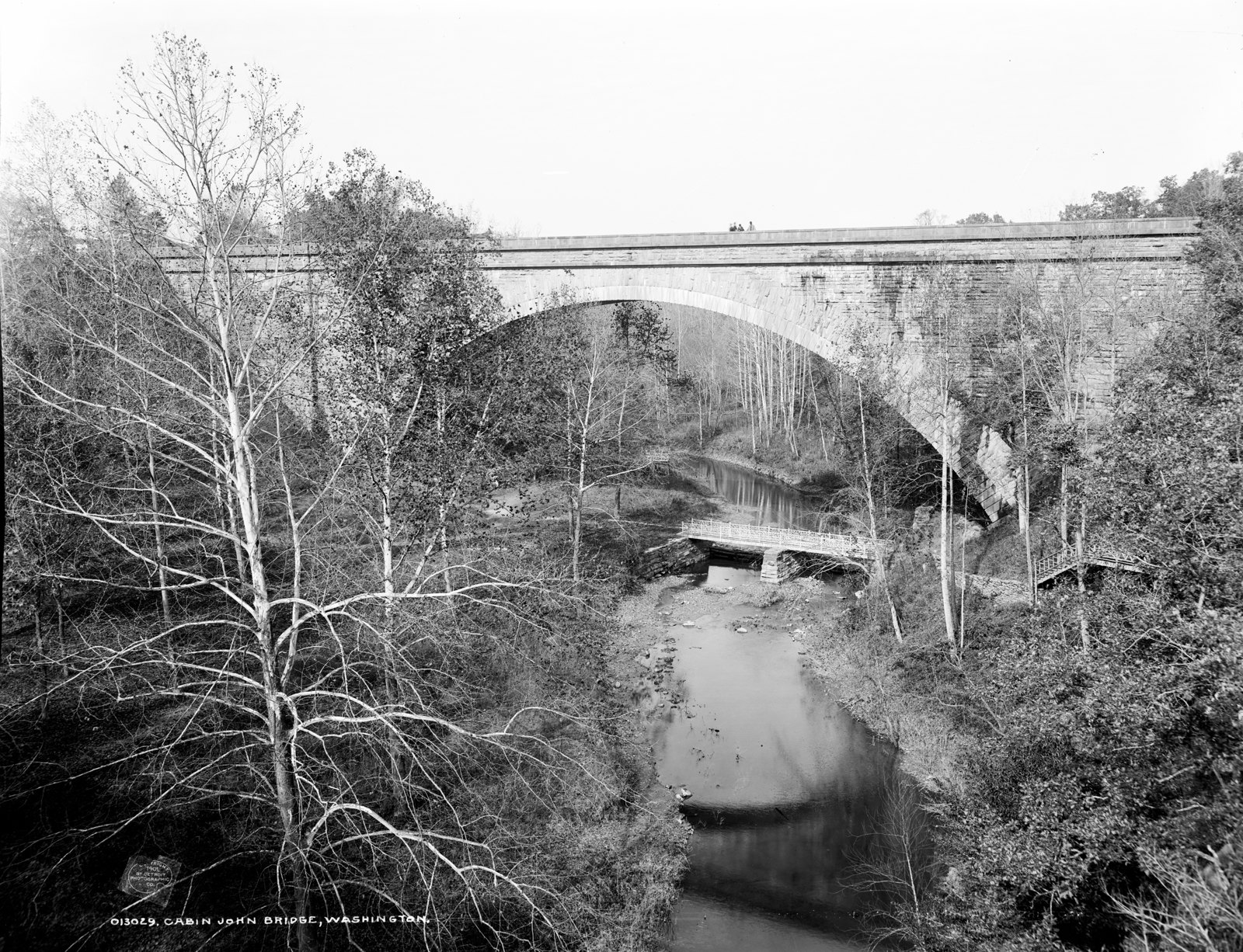
Cabin John Bridge around 1900: a great stone arch over a creek in the woods
Cabin John Bridge over Captain John's creek, around 1900. Detroit Publishing Co. / Library of Congress
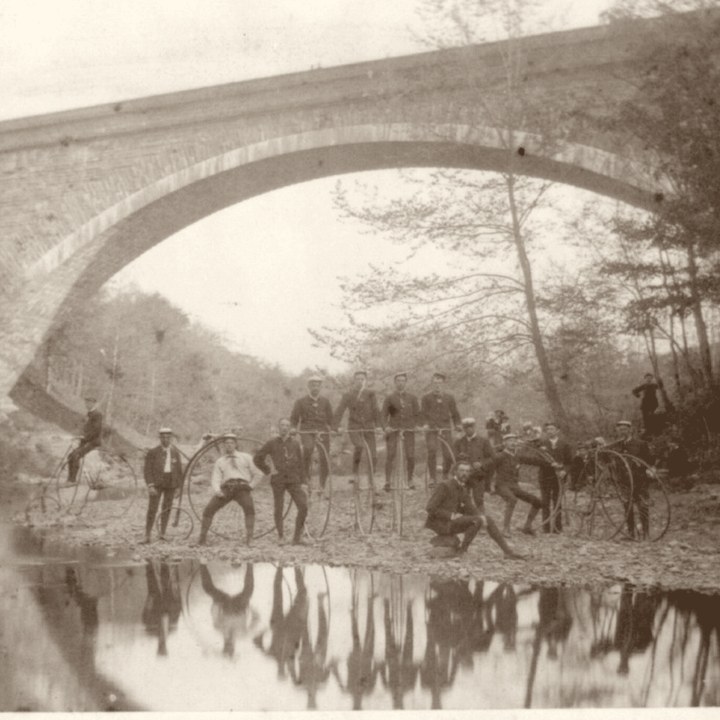
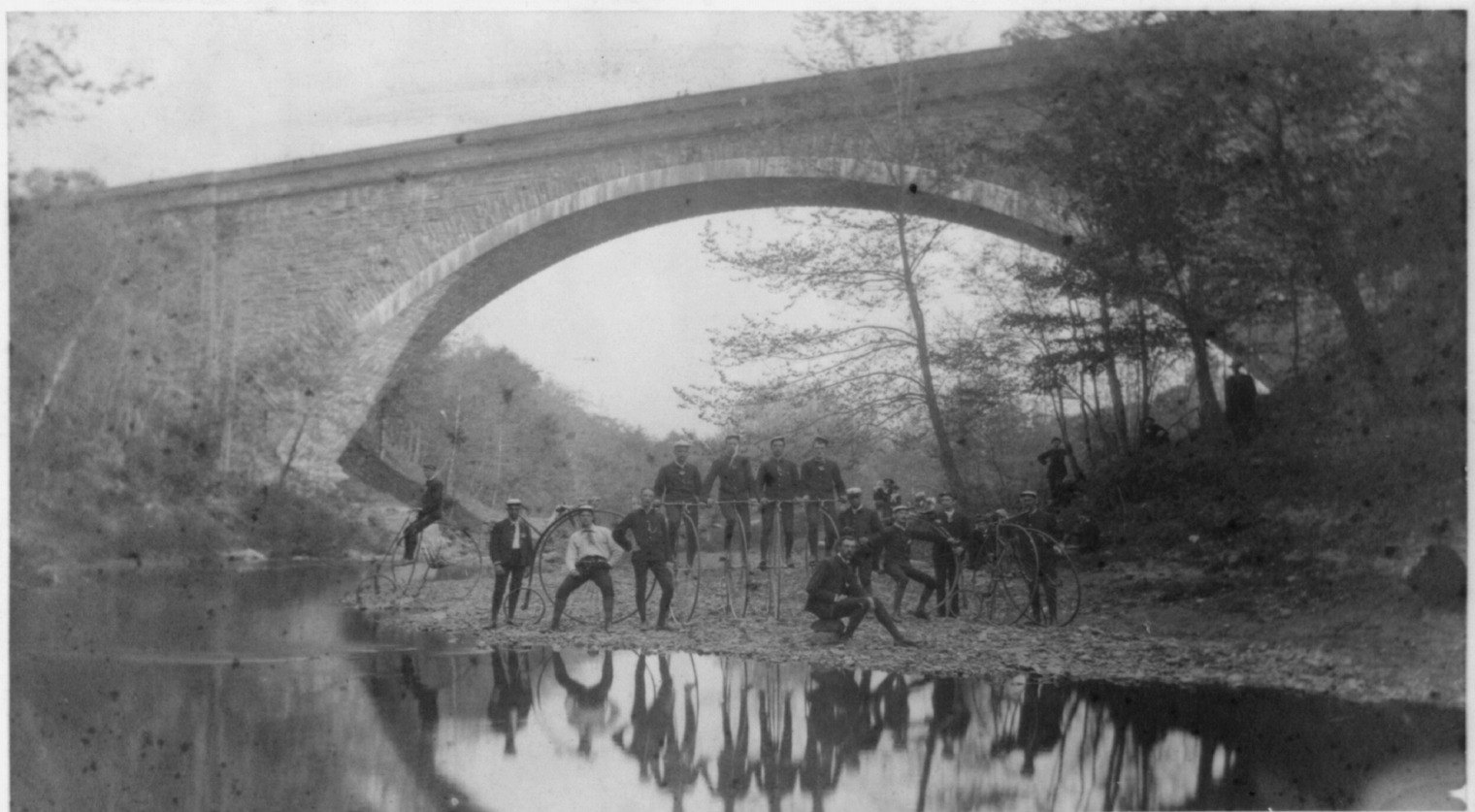
An 1890s postcard of Cabin John Bridge with a group of cyclists on the creek bank under the stone arch
An 1890s postcard of Cabin John Bridge, "the largest stone arch in the world," with a cycling club on the creek bank below. Library of Congress
Main Street Wallet

Not "Cabin" John but "Captain" John: Old Land Papers Reveal Whose Name It Really Was

On Sunday morning, November 14, 1926, the paper carried a surprise. "Cabin John," the name everyone used for the creek and neighborhood at the end of a Washington carline, was a mistake. The real name, the government found, belonged to a prominent Native American who lived in the valley: Captain John.

The name everyone usedCabin John
The name in the old papersCaptain John
Read the story →
🌉 Just how big is Cabin John Bridge?
  • Work began in 1857 and finished in 1864. Seven years of stacking stone.
  • Its single arch spans 220 feet (67 m). When it was finished, it was the longest stone masonry arch in the world, and it kept the title for 39 years, until the Adolphe Bridge opened in Luxembourg in 1903.
  • It stands about 101 feet (31 m) above the creek, roughly a ten-story building.
  • Its real job is carrying water. The Washington Aqueduct runs inside it, bringing Potomac River water to the capital. People and carriages crossed on top; the water crossed inside.
  • More than 160 years later, water still flows through it and cars still drive over it. Today it is called the Union Arch Bridge.
The Day's Economy

The Zoo's Busiest Sunday Ever, and Four Leopards "Getting Acquainted"

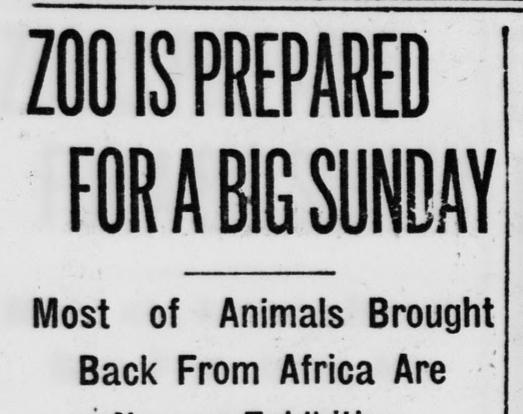
On Sunday, November 14, 1926, the National Zoo in Washington got ready for what might be the biggest crowd in its history. Nearly all the animals brought back from Africa were on show for the first time. The Sunday before, more than 80,000 people had come.

Four leopards getting acquainted through a screen
Patents & Inventions

Sunday Night, 9:15: A New York Soprano in Your Living Room

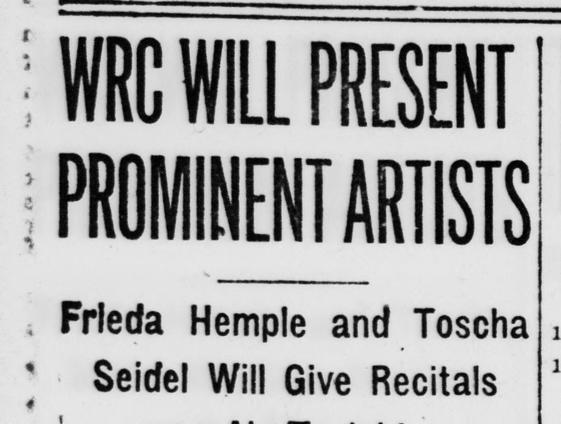
On Sunday night, November 14, 1926, Washington station WRC joined New York stations to broadcast soprano Frieda Hempel and the young violinist Toscha Seidel. It was a concert with no ticket and no need to dress up.

A New York soprano in the living room

🧩 Puzzle Corner

Five games, fresh every day from this edition

Every word comes from today's stories. Drag across a word (or tap its first letter, then its last).

HKPLRDYCRHPDBTSRVZCOAWIAFRRPODIIGPRGCEIRECPEOGTRHIUDRAIDRALAAWFEGHZDICARISAIWEGHEIICNNNYCPDIAVEOAROLEERNRREINDEERLAFNAAIAGNIEEPNCCFLDCYANPOKPAVFHEIIIGEECGCNEZOODKLAGMTFG
Hi! I hid 12 words from today's paper. Can you find them all?

Found: 0 / 12

  • BRIDGE
  • CAPTAIN
  • CREEK
  • GIRAFFE
  • HIGHWAY
  • LEOPARD
  • PACIFIC
  • RADIO
  • REINDEER
  • SOPRANO
  • VIOLIN
  • ZOO
🎉 You found them all in seconds! Scroll up and you can read the stories these words came from, too. 🐝↑

Want more? Play free Sudoku, Minesweeper and more at Wink Puzzle →

Ads of the Good Old Days ^^ · Nov. 14, 1926

Real ads from that day's paper, with 1926 prices in today's money.

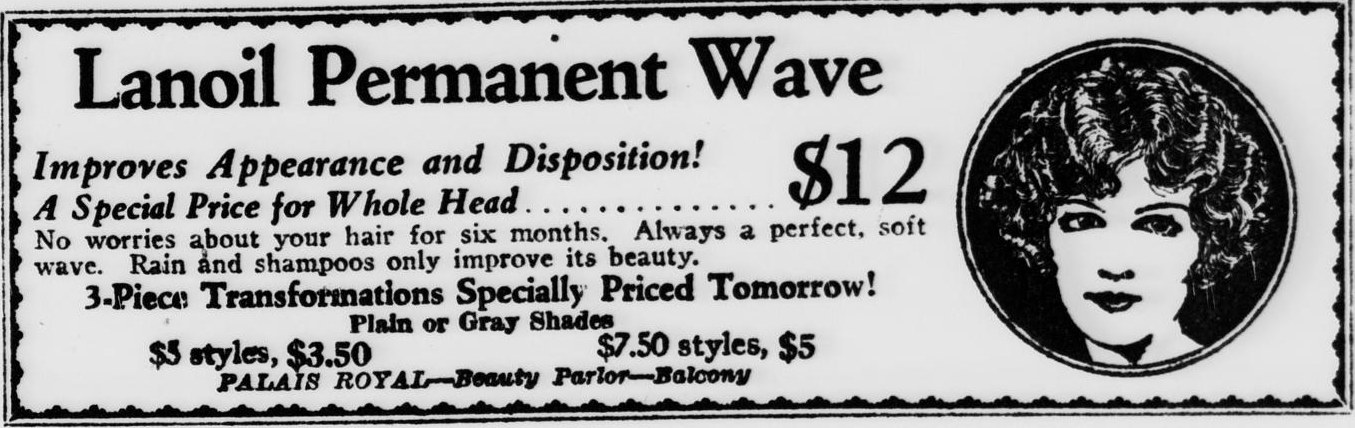
A permanent wave ad from Nov. 14, 1926: a drawing of a woman with curls and the words "Improves Appearance and Disposition!" for $12

"Improves Appearance and Disposition!" The Lanoil Permanent Wave

LANOIL PERMANENT WAVE
IMPROVES APPEARANCE AND DISPOSITION!
A SPECIAL PRICE FOR WHOLE HEAD . . . $12

Back then, it promises to improve not just your looks but your disposition. Then again, a good hair day does put you in a good mood. "No worries about your hair for six months," the ad went on. "Always a perfect, soft wave. Rain and shampoos only improve its beauty." Twelve dollars is about $228 today.

Palais Royal Beauty Parlor (Balcony) · Sunday Star, page 35See the page →
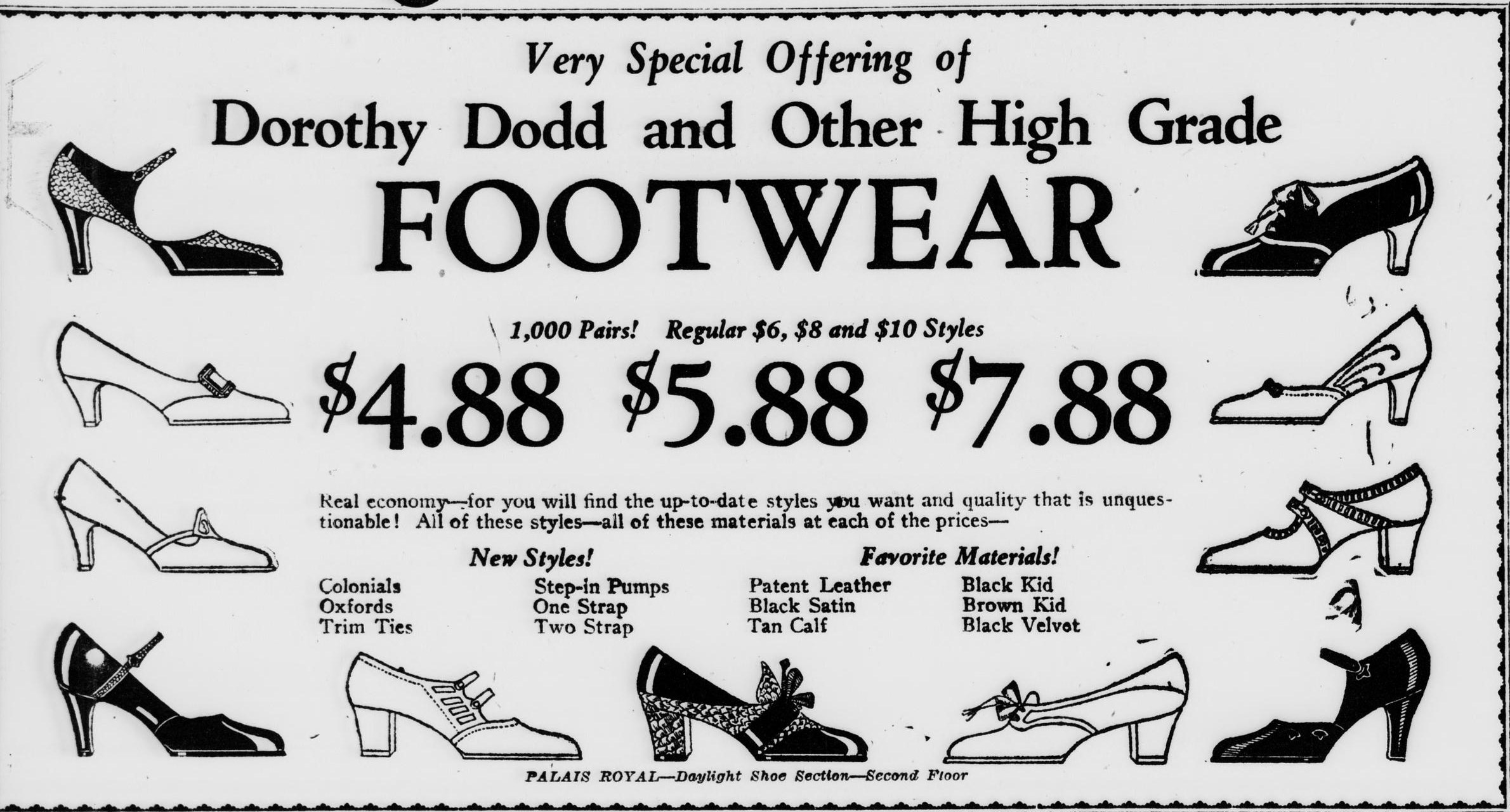
A department store shoe ad from Nov. 14, 1926 with drawings of women's shoes and the prices $4.88, $5.88 and $7.88
"1,000 Pairs! Regular $6, $8 and $10 Styles"Palais Royal (Kresge), Washington · Sunday Star, page 35
ThenToday's money
Dorothy Dodd shoes (regular $6)$4.88≈ $93
Same shoes (regular $8)$5.88≈ $112
Same shoes (regular $10)$7.88≈ $150

Patent leather, black satin, tan calf, even black velvet. "All of these styles, all of these materials at each of the prices," the ad boasted. Just above it, Toy Town announced that Santa Claus had arrived with his famous team of live reindeer, the very team that "brought him down from the frozen North."

See the page →
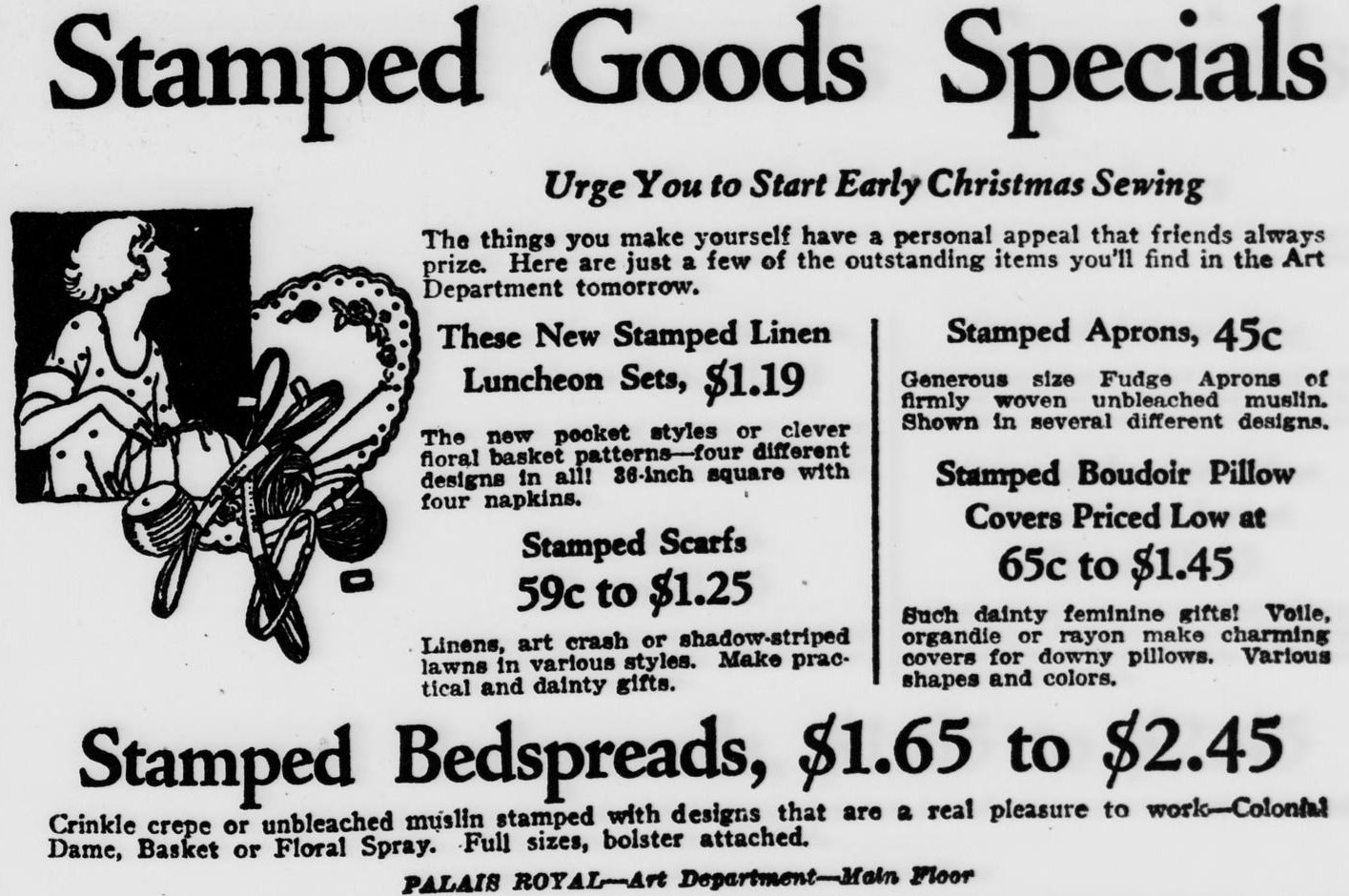
A department store needlework ad from Nov. 14, 1926: stamped luncheon sets, aprons, pillow covers and bedspreads, with prices
"Start Early Christmas Sewing"Palais Royal Art Department · Sunday Star, page 35
ThenToday's money
Stamped fudge apron45¢≈ $8.60
Luncheon set with 4 napkins$1.19≈ $23
Stamped bedspread$1.65–$2.45≈ $31–$47

The patterns came printed on the cloth, so you only had to follow them with thread. "The things you make yourself have a personal appeal that friends always prize," the ad said. A gentle nudge, in mid-November, to start on Christmas presents.

See the page →
Person of the day

John Philip Sousa

1854–1932 · The "March King," coming home to Washington that week

The music page of the Sunday Star, November 14, 1926, page 93, named him the most welcome visitor of the week. Sousa was born in Washington, led the Marine Band, then built his own band and toured the world. He wrote "The Stars and Stripes Forever" and so many other marches that he was called the "March King." The paper announced that Washington's "native son" would bring his famous band for two programs that Friday, and added that anyone so famous was bound to collect funny stories, starting with one from Valencia, Spain. His hometown was getting ready to tap its feet.

The day in one line
On Sunday, November 14, 1926, Washington learned who its neighborhood was really named for, and at the Zoo four leopards were slowly getting to know each other through a wire screen.
— the Wink High Desk

Also in the news

Past editions

See every past edition →