The Place That Threw a Wedding in a Day: The Y.M.C.A. Knocks on Its Neighbors' Doors
On November 14, 1926, the paper said the Washington Y.M.C.A. was making a last push to reach its fund goal by Wednesday. The campaign chairman described the work most people never saw, including the day the Y arranged a whole wedding.
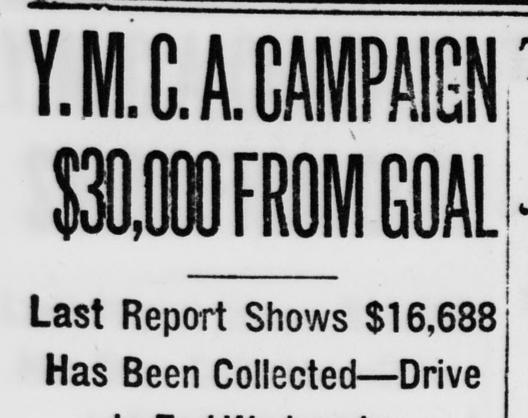
Page 13 put it in the headline: "Y. M. C. A. Campaign $30,000 From Goal." Volunteers were canvassing Washington to balance the association's yearly budget. The last report showed $16,688 raised, about $320,000 in today's money. The deadline was Wednesday afternoon, and the teams would meet for lunch at the City Club the next day to report again.
Campaign chairman M. O. Chance explained why the money mattered by describing work most people never heard about. Because the Y was in the Capital, requests came from all over the country, by mail, by telegram and in person.
All in one day
One recent day sounds like a movie. For a couple who wanted to get married, the Y obtained a marriage license, found a minister and held the ceremony. The same day it started a man on the road to his citizenship, and got permission for another man's wife to come to America from Europe. One wedding, one new citizen and one family reunited, in a single day.
Its job service was free. Last year it placed 218 of the 319 men who came looking for work, and talked with 1,466 others who needed advice. Every fall, young men arrived picturing the Capital as a place where jobs were many and easy to find, and many of them ended up at the Y. "This work is supported entirely by the community," Mr. Chance said, "and in turn the community benefits."
The page 13 story
- Raised so far: $16,688 (about $320,000 today)
- Deadline: Wednesday afternoon
- One day: a wedding, help toward citizenship, a wife allowed in from Europe
- Free job service: 218 of 319 placed, 1,466 advised
100 years later
Small gifts from neighbors became a wedding, a first job and a family together again. "Giving" can sound like a big word, but that day's paper showed something very concrete: happiness. A hundred years on, money spent on doing good is still the best-spent money of all.
Sources
Dollar conversions use the U.S. Bureau of Labor Statistics CPI-U (1926 annual average 17.7; September 2026: 336.94), a factor of about 19.