Washington to the Pacific, 3,133 Miles: The Coast-to-Coast Road Is 97 Percent Done
On November 14, 1926, the motoring page had good news. The transcontinental highway from Washington through St. Louis and El Paso to San Diego, California, was 97 percent improved, the most nearly finished road across the country.
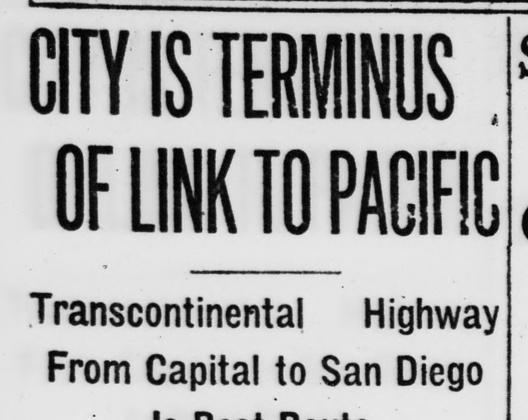
Page 95 announced it: "City Is Terminus of Link to Pacific." According to a federal highway report, the road from the National Capital through St. Louis, Texarkana and El Paso to San Diego was the most nearly finished of all the routes across the country. Ninety-three percent was surfaced and four percent graded: 97 percent in all.
The whole route ran 3,133 miles, and 2,907 of them were surfaced. From Washington to St. Louis, the entire road was already improved. Compare the others: Norfolk to Los Angeles was 68 percent improved, and the northern road from Boston to Seattle 73 percent.
A road built by interest
Thomas H. MacDonald, chief of the Bureau of Public Roads, said the numbers showed how much interest people were taking in highways. With more cars every year, Americans were starting to dream of crossing the continent behind their own steering wheel, not by a train timetable. The next page reported that the country had spent $649,125,101 on roads in 1925 alone, more than $12 billion in today's money.
The page 95 story
- Route: Washington → St. Louis → Texarkana → El Paso → San Diego
- Length: 3,133 miles (2,907 surfaced, 131 graded)
- Improved: 97% (93% surfaced + 4% graded)
- Other routes: Norfolk–Los Angeles 68%, Boston–Seattle 73%
- Page 96: $649,125,101 spent on U.S. roads in 1925
100 years later
The highways that cross America today were laid down on top of roads like this one. The simple pleasure of driving to see the ocean on a weekend started with people 100 years ago, joining the road together one stretch at a time.
Sources
- Sunday Star, Nov. 14, 1926, page 95: "City Is Terminus of Link to Pacific"
- Sunday Star, Nov. 14, 1926, page 96: "$649,125,101 Spent on Roads in 1925"
Dollar conversions use the U.S. Bureau of Labor Statistics CPI-U (1926 annual average 17.7; September 2026: 336.94), a factor of about 19.