The Zoo's Busiest Sunday Ever, and Four Leopards "Getting Acquainted"
On Sunday, November 14, 1926, the National Zoo in Washington got ready for what might be the biggest crowd in its history. Nearly all the animals brought back from Africa were on show for the first time. The Sunday before, more than 80,000 people had come.
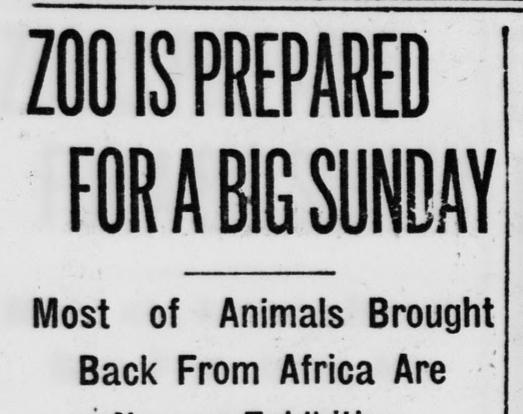
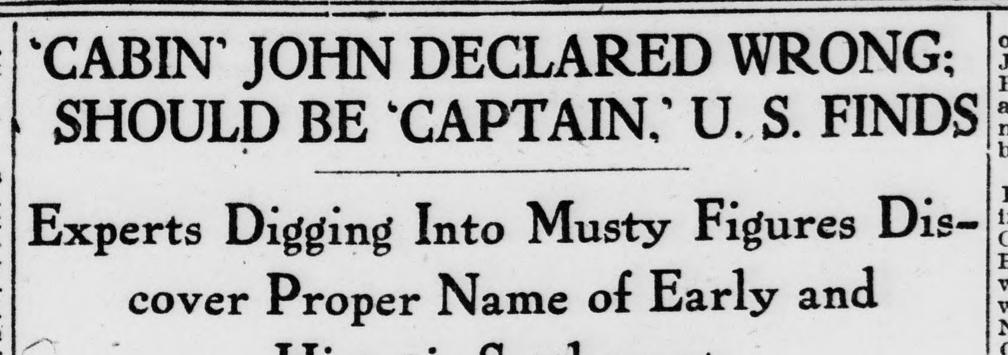
Page 10 announced it: "Zoo Is Prepared for a Big Sunday." All the larger animals collected by the Smithsonian-Chrysler expedition in Tanganyika, East Africa, were now in their cages, along with most of the birds and monkeys. Even the Sunday before, with only a few of them on show, more than 80,000 people had crowded into the animal houses.
The star attraction was the lion house, with four leopards, one of them "the largest in captivity." There were two to a cage, kept apart by a heavy wire screen. The keepers' plan: let them get to know each other through the screen for four or five weeks, then take it away, and the leopards would be "friendly, if not affectionate."
Not quite a romance yet
The reporter was honest. "Just now mighty little courtship is going on. Instead the leopards snarl viciously at each other and at the crowds." Dr. William M. Mann, superintendent of the Zoo, said that putting them together now would be a very bad idea. On the bright side, visitors had the rare chance to see truly wild leopards, who seemed to find "the curious two-legged animals" outside the cage at least as interesting.
The new favorites were two young giraffes. All the day before, there was hardly a moment when 50 or more children were not crowded in front of their cage. The monkey house was so busy that each cage had been split in two, and the vervets, blue monkeys and baboons were "proving sociable." The paper gave the first sign that a monkey has settled in: it starts to play.
The page 10 story
- Animals from: Tanganyika, East Africa (Smithsonian-Chrysler expedition)
- Visitors the Sunday before: more than 80,000
- Lion house: 4 leopards (one the largest in captivity), Egyptian cobras
- New favorites: 2 young giraffes, and a shoebill stork in the bird house
- Monkey house: vervets, blue monkeys, baboons
100 years later
The National Zoo in Washington is still free. Like the families who took their children to see the giraffes on that Sunday in 1926, families today can visit the animals without spending a cent. A big day out that costs nothing is good news for any wallet.
Sources
Dollar conversions use the U.S. Bureau of Labor Statistics CPI-U (1926 annual average 17.7; September 2026: 336.94), a factor of about 19.