The Pop-Up Toaster Comes Home: How a Mechanic's Patent Reached the Kitchen
A Minnesota mechanic tired of burnt toast patented a toaster that switched itself off and popped the bread up. In 1926 a home version finally reached American kitchens.
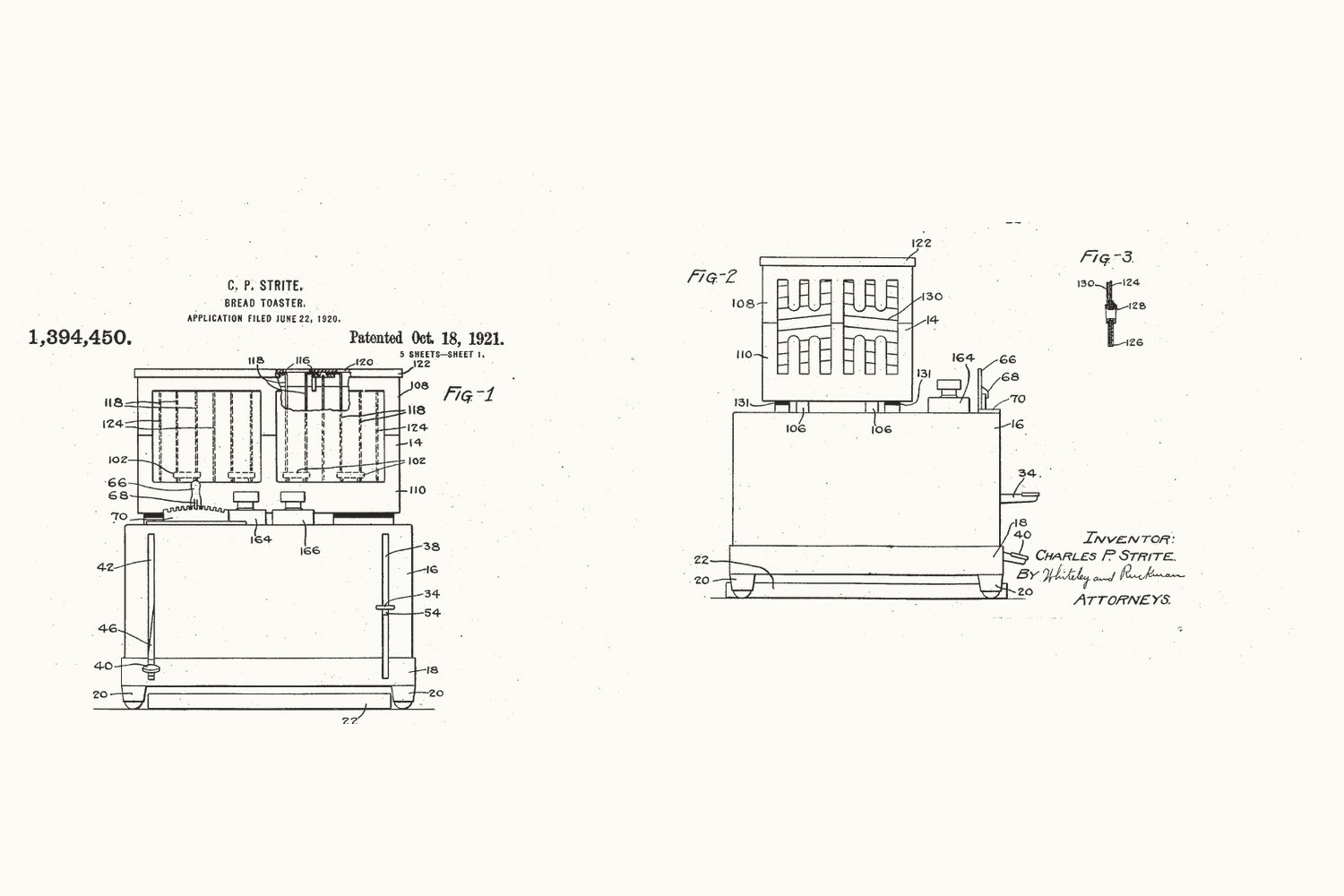
Every morning in the early 1920s, the workers in a factory lunchroom in Stillwater, Minnesota, got burnt toast. The cook had too many slices to watch at once. Charles P. Strite, a master mechanic at the plant, decided a machine could do the watching.
His idea: a toaster with springs and a timer. When the bread was done, the heat would switch off by itself and the toast would rise up out of the slot. He filed for a patent on June 22, 1920, and on October 18, 1921, he received U.S. Patent 1,394,450 for his "Bread Toaster."
From restaurants to homes
Strite formed a company in 1921 to build the toaster, at first for restaurants. It was a success with cooks who had to make toast by the hundreds. In 1926, a businessman named Max McGraw bought the company, and its Toastmaster brought the automatic, pop-up toaster into the home market.
It was not cheap. The Toastmaster sold for $12.50, while a simple "flip-flop" toaster — the kind where you turned the bread by hand — cost about $2. But it did something no other kitchen machine did: it remembered the toast for you.
The toaster by the numbers
- Patent filed: June 22, 1920
- U.S. Patent 1,394,450 granted: October 18, 1921
- Home model on the market: 1926
- Toastmaster price: $12.50 (≈ $238 today)
- Simple flip-flop toaster: about $2 (≈ $38 today)
Sales boomed through the next decade. A small fix for a lunchroom problem had turned into one of the most familiar machines in the American kitchen.
Sources
- Charles P. Strite, U.S. Patent 1,394,450, Bread Toaster (filed June 22, 1920; granted Oct. 18, 1921)
- American Heritage: The electric toaster (Strite, the 1926 home model, $12.50 price)
- The Henry Ford: Waters-Genter Company Toastmaster toaster
Dollar conversions use the U.S. Bureau of Labor Statistics CPI-U (1926 annual average 17.7; September 2026: 336.94), a factor of about 19.