Monday, November 23, 2026100 years ago today: Tuesday, November 23, 1926

The Good News of 100 Years Ago

Money · Gold · Oil · Patents
Gold, 1 oz (1926)$20.67Eggs, a dozen48.5¢Milk, a quart14¢Ford Model T Runabout$360Route 662,448 mi$1 in 1926 = today≈ $19Gold today, 1 oz$4,043
Front Page › Gold & Markets
Gold & Markets

Gold in the Alps: What 35 Grams per Ton Was Worth

On November 12, 1926, the paper reported new veins of gold and silver ore in the Italian Alps — 33 to 38 grams of gold per ton of rock. At 1926 prices that was about $24 of gold a ton; at today's, about $4,600.
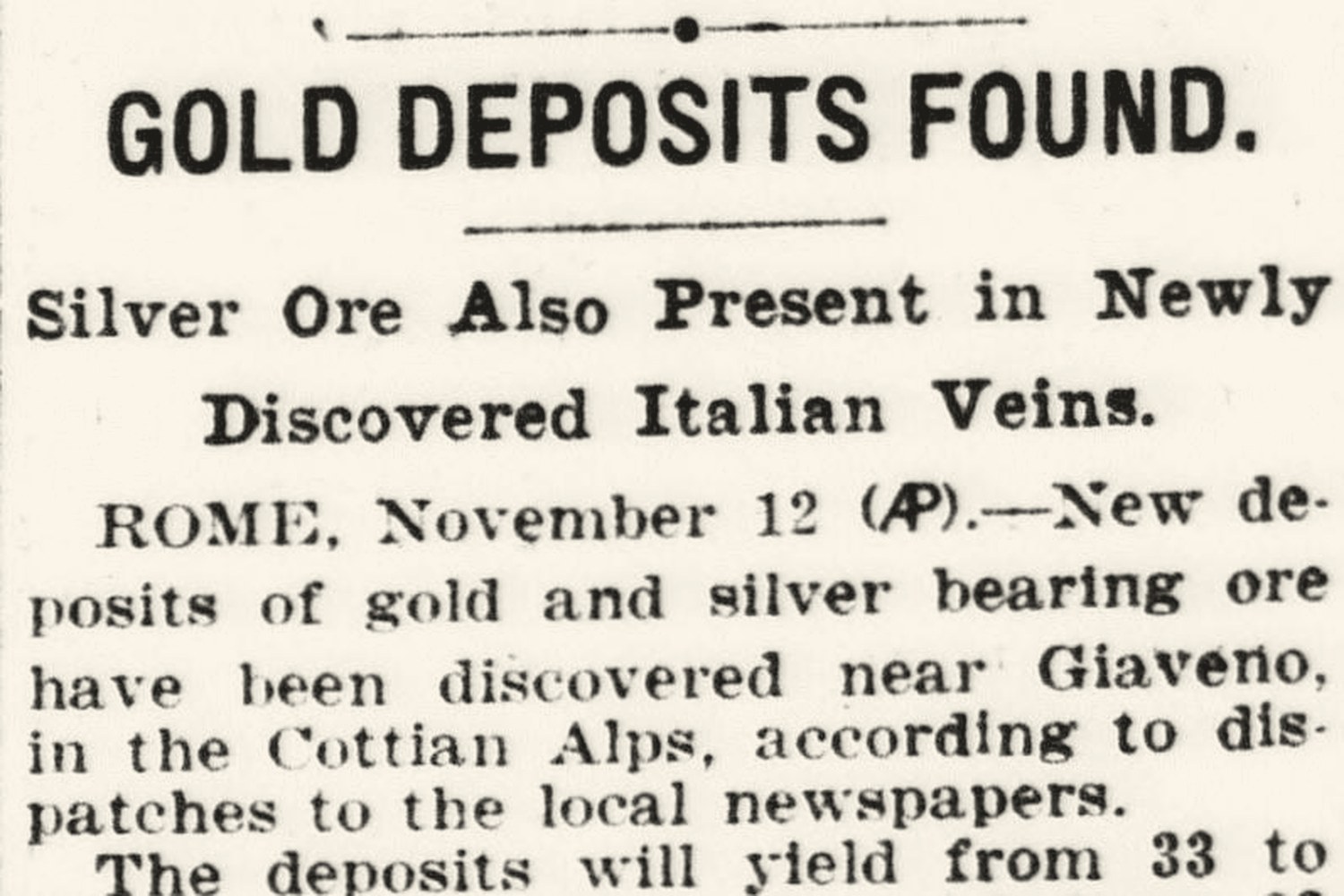
A short story from the Evening Star of Nov. 12, 1926, headlined Gold Deposits Found
Evening Star, Nov. 12, 1926, page 35: "Gold Deposits Found. Silver Ore Also Present in Newly Discovered Italian Veins." Evening Star, Nov. 12, 1926 / Library of Congress
Gold per ton (1926 price)About $24
Same gold, today's priceAbout $4,600

Page 35 of the Evening Star that day carried a short AP item from Rome. New deposits of gold- and silver-bearing ore had been found near Giaveno, in the Cottian Alps not far from Turin, according to dispatches to the local newspapers.

The story gave the numbers: the deposits would yield 33 to 38 grams of gold a ton, and 23 to 230 grams of silver. The lay of the land would allow galleries to be cut to extract the ore.

A ton of rock, 35 grams of gold

In 1926 an ounce of gold (about 31.1 grams) cost $20.67 — about 66 cents a gram. So 35 grams from a ton of ore was worth about $24. Today an ounce sells for more than $4,000, and the same 35 grams is worth about $4,600. Over 100 years, prices in general rose about 19 times; gold rose about 200 times.

On page 35

  • Where: near Giaveno, Cottian Alps, Italy
  • Gold: 33–38 grams per ton of ore
  • Silver: 23–230 grams per ton
  • Plus: ground suited to cutting galleries
  • 1926 gold price: $20.67 an ounce (about 66¢ a gram)

100 years later

Break a ton of rock to get a few teaspoons of gold: miners in 1926 tunneled into mountains for that. Today those 35 grams weigh far more in dollars — but the sweat of digging a ton of rock weighs the same as ever. This is a history story, not investment advice.

The lesson, 100 years laterPrecious things hide in small amounts among a lot of rock. Miners cut into a mountain to find 35 grams in a ton. Patience in picking out the small things is what creates value.

Sources

  1. Evening Star, Nov. 12, 1926, page 35: "Gold Deposits Found" (AP, Rome)

Dollar conversions use the U.S. Bureau of Labor Statistics CPI-U (1926 annual average 17.7; September 2026: 336.94), a factor of about 19.
More from this edition

The Day's Economy

Shaw Wins the Nobel: "It Must Be Because I Wrote Nothing That Year"

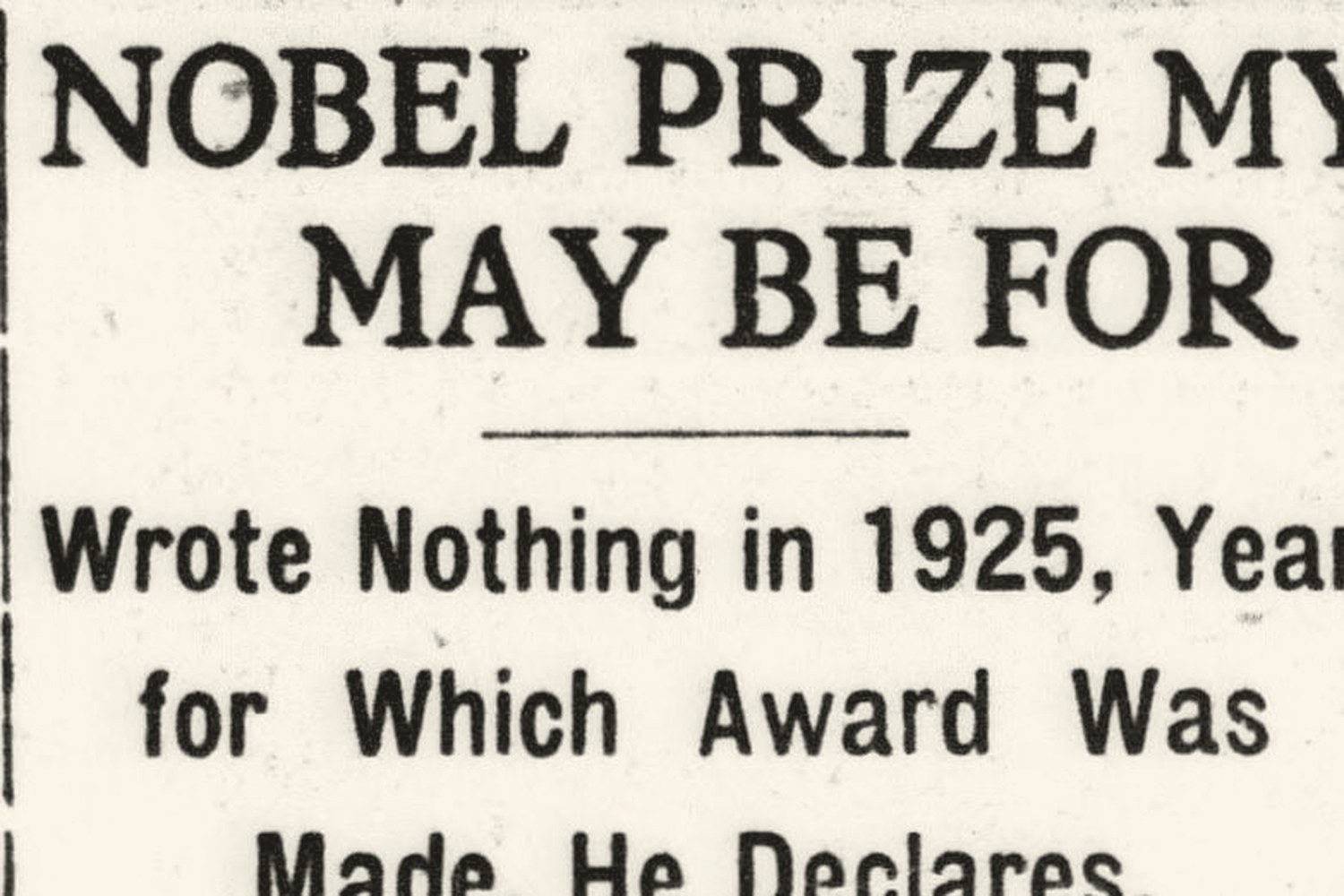
On November 12, 1926, the paper reported that George Bernard Shaw would receive the 1925 Nobel Prize for literature. Shaw laughed that it must be because he wrote nothing that year. A few days later he decided to spend the money on others.

"It must be because I wrote nothing"
Patents & Inventions

A Device Against the Pilot's Worst Fear: the Tail Spin

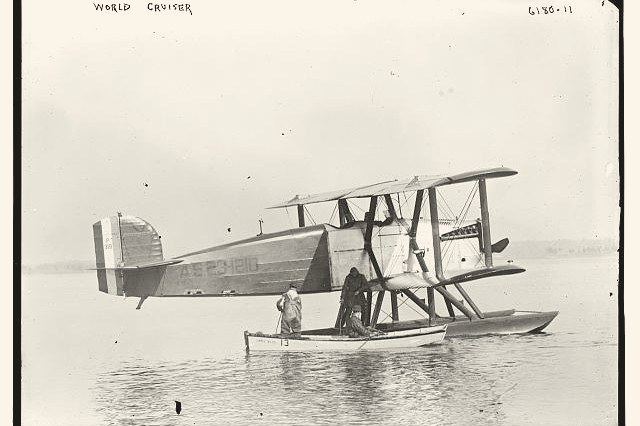
On November 12, 1926, the paper reported that Donald Douglas, who designed the round-the-world planes, had invented a device to prevent tail spins. Twenty-two test flights, his plant said, proved it worked.

22 test flights, all successful
Main Street Wallet

The 95 Pairs of Shoes Left by a Man Who Walked the World for 40 Years

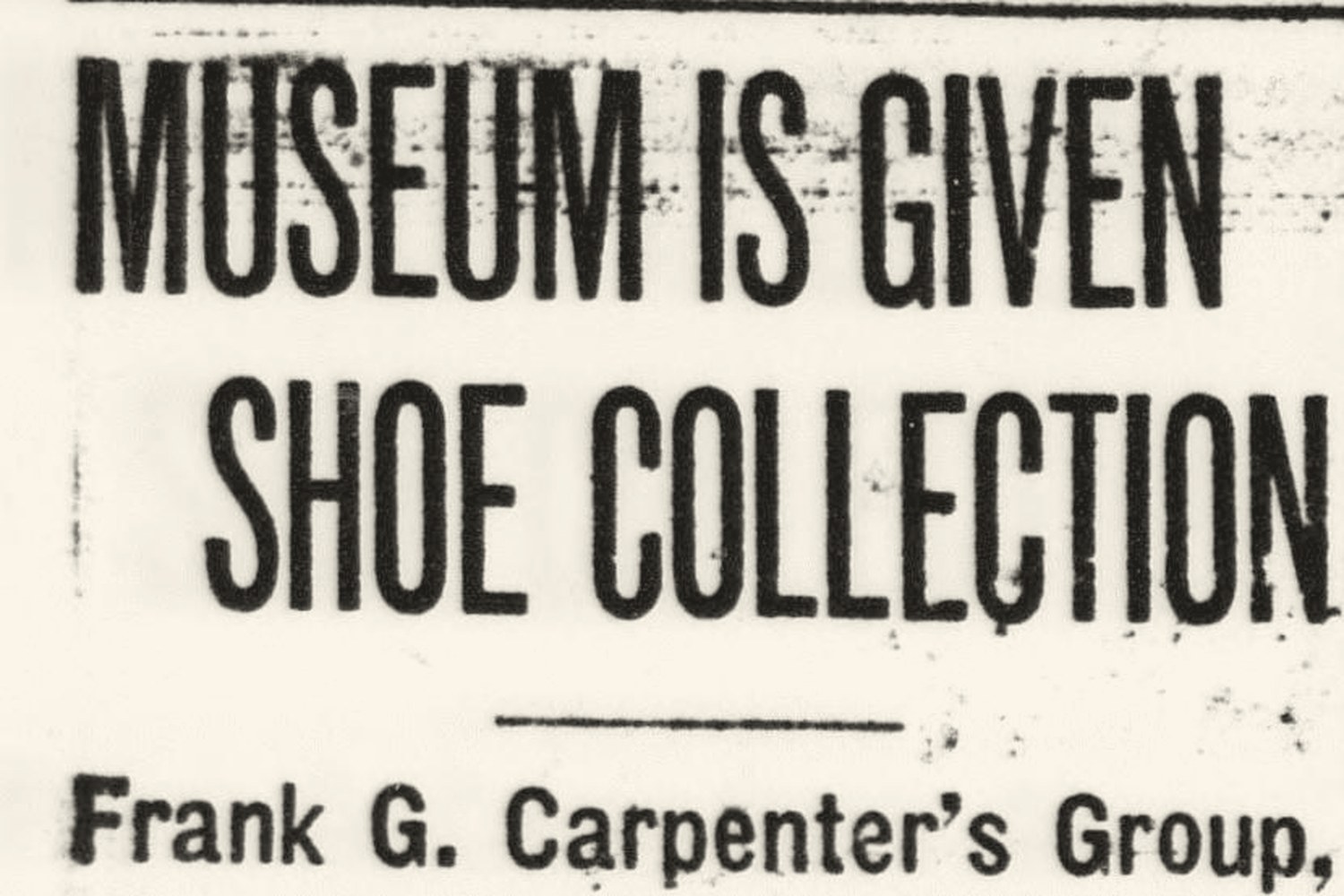
On November 12, 1926, the paper reported that the travel writer Frank G. Carpenter's collection of 95 pairs of shoes from around the world was going to the Smithsonian. His daughter gave her father's shoes to the public.

95 pairs of shoes from 40 years of travel