A Device Against the Pilot's Worst Fear: the Tail Spin
On November 12, 1926, the paper reported that Donald Douglas, who designed the round-the-world planes, had invented a device to prevent tail spins. Twenty-two test flights, his plant said, proved it worked.
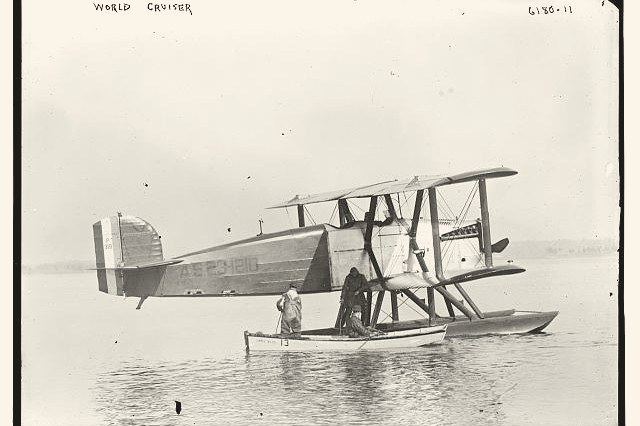
Page 34 of the Evening Star that day carried an AP story from Santa Monica, California. Donald W. Douglas, the aeronautical engineer who designed the American round-the-world planes, had invented "a device which would make a tail spin impossible." Officials of his airplane factory made the announcement; Douglas himself was in New York.
A tail spin is when a plane loses lift and corkscrews toward the ground. The story called it "the worst feared antic of heavier-than-air craft." Plant officials said 22 test flights at nearby Clover Field had shown, to their satisfaction, that it could be defeated.
Special wings on the tail
The apparatus consisted of specially designed ailerons on the tail of the machine and a new type of surfacing. The test plane was to be taken to McCook Field in Ohio for further tests by Army air experts — the company's word would be checked by other eyes.
On page 34
- Inventor: Donald W. Douglas, designer of the round-the-world planes
- Device: special ailerons on the tail + new surfacing
- Tests: 22 flights at Clover Field
- Next: further tests at the Army's McCook Field
- Goal: an end to the tail spin
100 years later
A device that ended tail spins for good proved hard to build, and pilots still learn how to recover from a spin. But Douglas's company went on to build airliners like the DC-3 that opened the skies to millions. Taking on the most feared problem head-on — and testing it 22 times — is part of why flying became safe.
Sources
- Evening Star, Nov. 12, 1926, page 34: "Invents Plane Device to Prevent Tail Spin" (AP, Santa Monica)
- Library of Congress: World Cruiser (Bain News Service)
- Wikipedia: Douglas World Cruiser (first aerial circumnavigation, 1924)
Dollar conversions use the U.S. Bureau of Labor Statistics CPI-U (1926 annual average 17.7; September 2026: 336.94), a factor of about 19.