The Mailbag That Started an Airline
In 1926, the Post Office stopped flying all its own airmail and hired private companies instead. One small outfit in the Northwest flew its first sack of letters that spring — and grew into United Airlines.
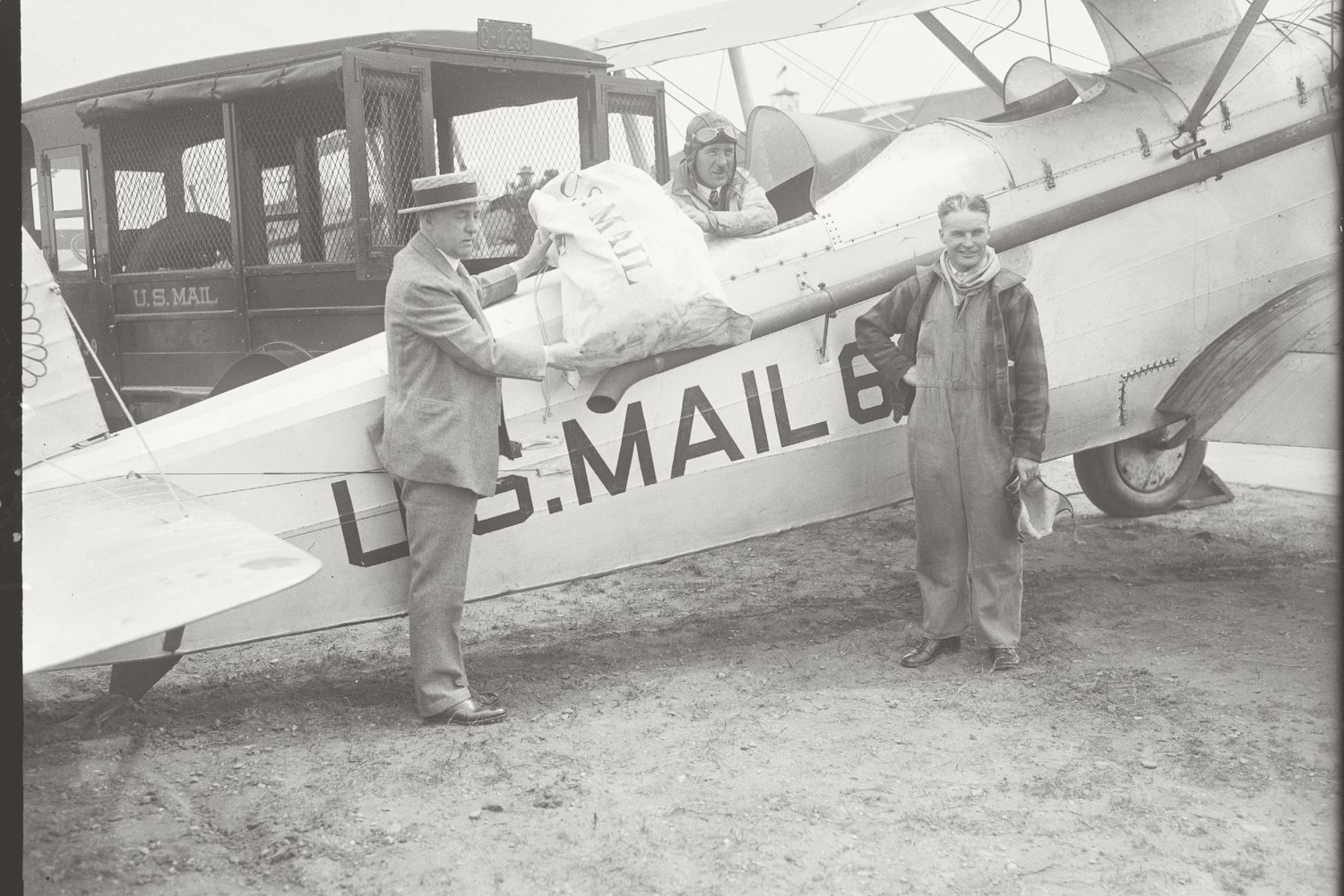
In 1926, flying was still a stunt for most Americans. Planes were small, open to the wind and made of wood and fabric. But they were fast — and the U.S. Post Office wanted fast.
So the Post Office decided to hire private companies to carry the mail by air. In 1925 it let its first five Contract Air Mail routes, and in 1926 the new carriers began to fly them, one by one.
A Swallow over the mountains
One of those routes went to Walter T. Varney, a former pilot with a small company in the Northwest. On April 6, 1926, Varney's chief pilot, Leon "Lee" Cuddeback, took off from Boise, Idaho, in a Swallow biplane and flew a load of mail to the railroad hub at Pasco, Washington. The next day he flew back with 200 pounds of mail.
Airmail in 1926
- First Contract Air Mail routes let: 1925 (five routes)
- Varney's first contract flight: April 6, 1926
- Plane: a Swallow biplane
- Mail on the return trip: 200 pounds
- Other first flights that year: Chicago–St. Louis (April 15), Chicago–Twin Cities (June 7), Boston–New York (July 1), Seattle–Los Angeles (September 15)
From mail route to airline
The mail contracts paid the bills, and passengers came later. In 1930, Varney Air Lines was bought by the group that would form United Air Lines; by 1934 it had merged into United. Every airline ticket in your phone has a little of that 1926 mailbag in its family tree.
Sources
- History of United Airlines (Wikipedia: Varney's first contract flight, April 6, 1926)
- Smithsonian National Postal Museum: Contract Airmail Routes (CAMs)
- Library of Congress: mail brought to Washington by air mail (1927)
Dollar conversions use the U.S. Bureau of Labor Statistics CPI-U (1926 annual average 17.7; September 2026: 336.94), a factor of about 19.