The Young Man Who Listened to Angry Car Painters
In the mid-1920s, a young lab worker at a small sandpaper company noticed that auto painters were swearing at their two-tone cars. His fix was masking tape — and later, Scotch tape.
In 1921, Richard Drew, a young man from St. Paul, Minnesota, took a job at a modest sandpaper company called 3M. Part of his work was to carry samples of the company's waterproof sandpaper to auto body shops so painters could try it.
In those shops he saw a problem nobody at his company had asked him to solve. Two-tone cars were in fashion, and painters had a terrible time keeping a clean line where one color met the other. The glue and paper they used either fell off or tore the fresh paint away.
Two years in the lab
Drew went back to the lab and kept at it. After about two years of work, in 1925, he had the first masking tape: a strip of paper with a gentle glue that held firmly but pulled away clean.
The early version was not perfect. One painter, frustrated when a roll lost its grip, told him to "take this tape back to those Scotch bosses of yours and tell them to put more adhesive on it!" In those days "Scotch" was slang for cheap. The nickname stuck — and in 1930, when Drew invented a clear cellophane tape, it was sold as Scotch tape.
The tape trail
- Drew joins 3M: 1921
- First masking tape: 1925
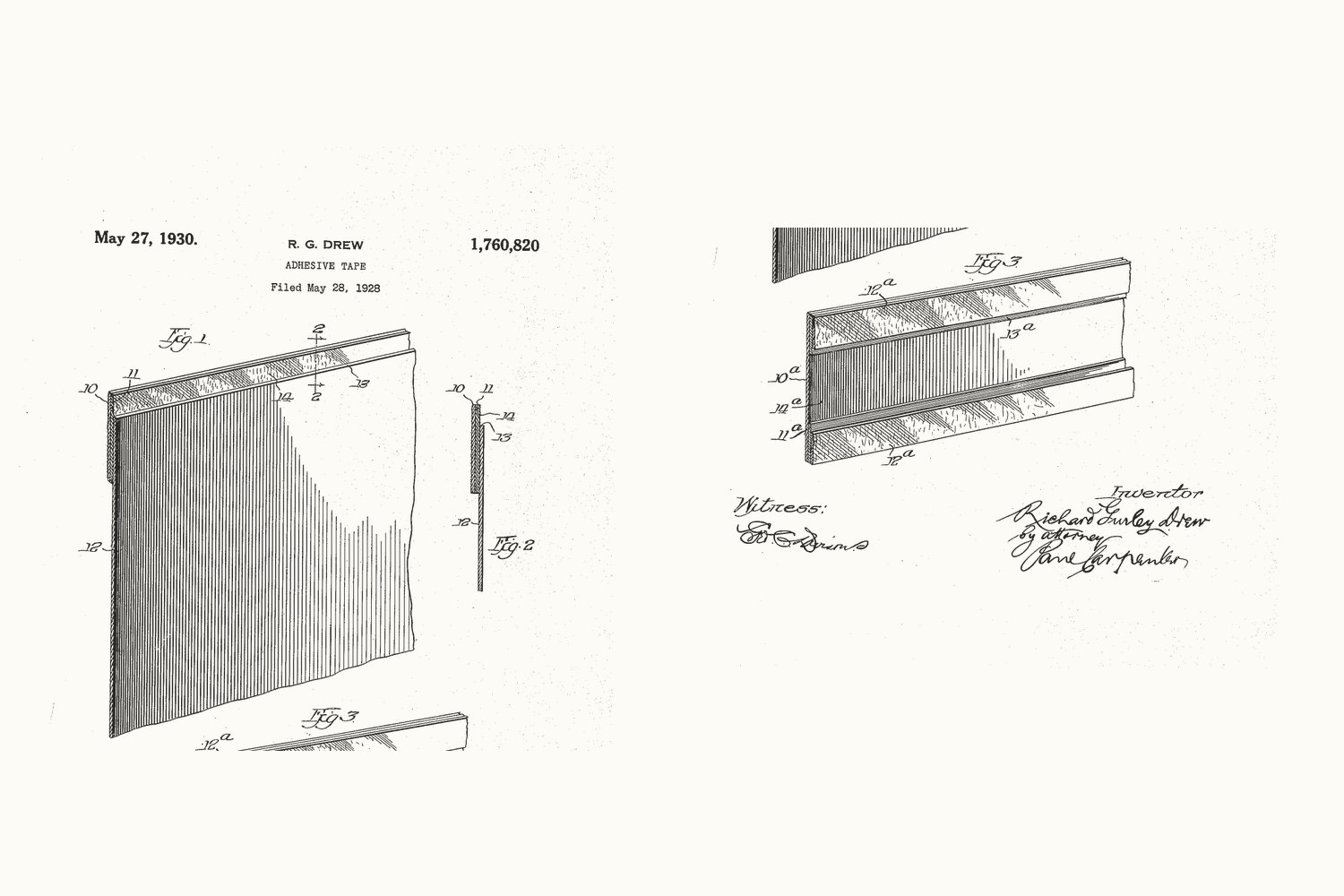
- Patent filed: May 28, 1928
- U.S. Patent 1,760,820 granted: May 27, 1930
- Clear cellophane tape: 1930
A small sandpaper company became one of the world's best-known manufacturers, and it started with one young worker who paid attention to a customer's bad day.
Sources
- Richard Gurley Drew (Wikipedia: 3M, the auto shop story, masking tape in 1925, the 'Scotch' quip)
- Lemelson-MIT: Richard G. Drew
- Richard G. Drew, U.S. Patent 1,760,820, Adhesive Tape (filed May 28, 1928; granted May 27, 1930)
Dollar conversions use the U.S. Bureau of Labor Statistics CPI-U (1926 annual average 17.7; September 2026: 336.94), a factor of about 19.