Monday, November 23, 2026100 years ago today: Tuesday, November 23, 1926

The Good News of 100 Years Ago

Money · Gold · Oil · Patents
Gold, 1 oz (1926)$20.67Eggs, a dozen48.5¢Milk, a quart14¢Ford Model T Runabout$360Route 662,448 mi$1 in 1926 = today≈ $19Gold today, 1 oz$4,043
Front Page › Main Street Wallet
Main Street Wallet

The Catalog Store Comes to Town: Sears

For decades, rural Americans flipped through the thick Sears catalog and ordered by mail. Then in 1925, Sears opened its first real store — because the car was starting to bring customers to town.
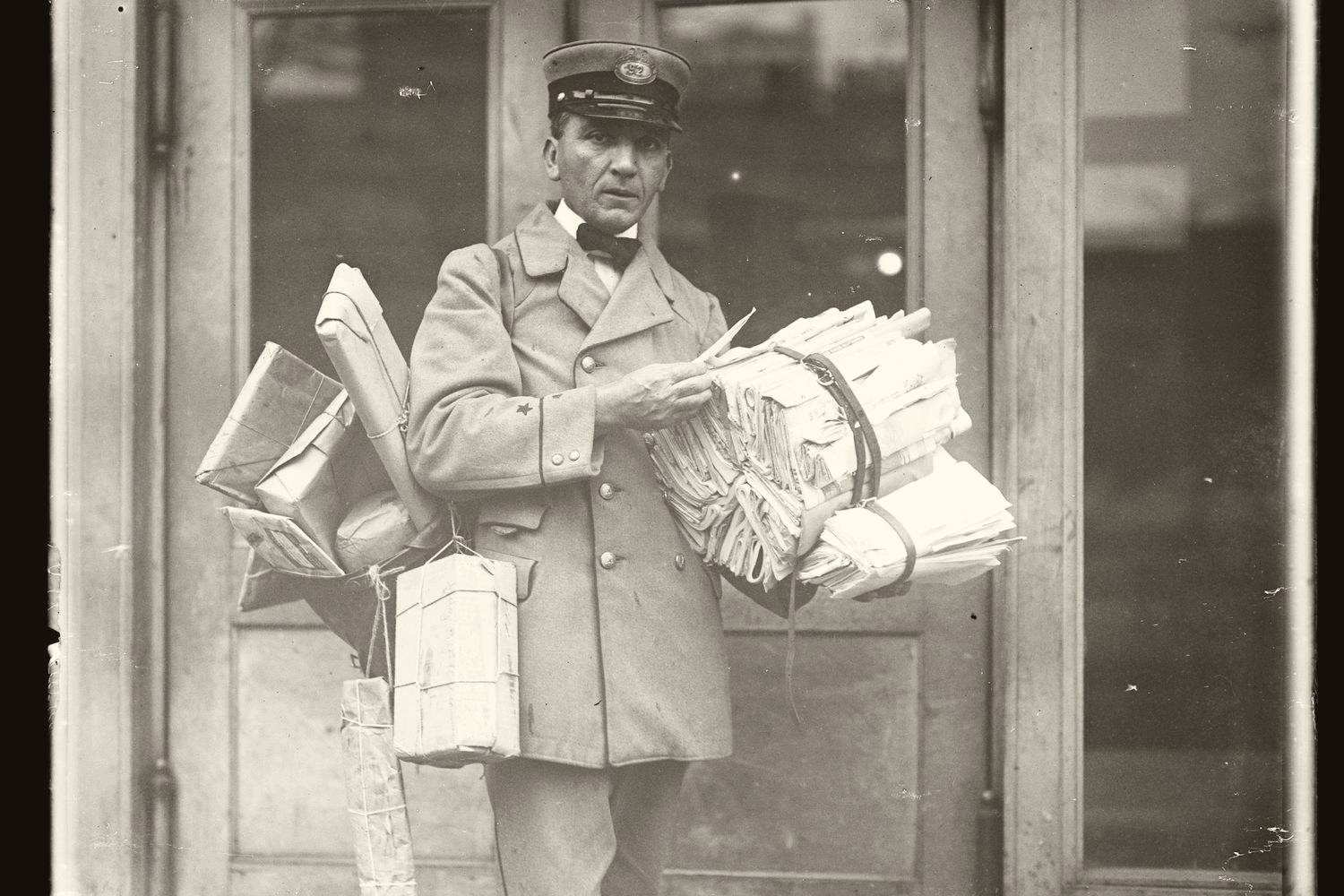
A uniformed mail carrier with his arms full of parcels and bundles of letters
A mail carrier loaded with parcels, about 1923. Sears catalog orders arrived the same way, carried by the mailman. National Photo Co. / Library of Congress
Sears stores, end of 192727
1932324

In 1926, for rural Americans the Sears, Roebuck catalog was practically a department store. Clothes, tools, toys, sewing machines — even the materials for a whole house. Fill out the order form, mail it in, and the mailman brought it to your door. It was the online shopping of its day.

But the world was changing. Farmers had cars now, and new roads to drive to the nearest town. Many people were leaving farms for cities altogether.

A vice president's judgment

Sears vice president Robert E. Wood read the change. City people didn't shop much by catalog; country people could now drive to a store. Unless Sears opened stores, its market would shrink. In 1925 Sears opened its first store inside its Chicago mail-order plant, and seven more before the year was out.

Sears, from catalog to store

  • First store: 1925, inside the Chicago mail-order plant
  • Why: cars, roads, and people moving to cities
  • Stores at the end of 1927: 27
  • Stores in 1932: 324

By the end of 1927 there were 27 stores, and by 1932, 324. When the road the customers traveled changed, the store went out to meet them on it.

The lesson, 100 years laterFollow the road your customers travel. Sears kept its successful catalog, and also opened stores for customers arriving by car. Change is a signal from customers before it is a crisis.

Sources

  1. EBSCO Research Starters: Sears, Roebuck Opens Its First Retail Outlet (1925 Chicago, Robert E. Wood, 27 stores in 1927, 324 in 1932)
  2. Library of Congress: mail carrier (about 1923)

Dollar conversions use the U.S. Bureau of Labor Statistics CPI-U (1926 annual average 17.7; September 2026: 336.94), a factor of about 19.
More from this edition

The Day's Economy

The Customers Decided: How Kleenex Found Its Real Job

When Kleenex arrived in 1924, it was sold for wiping off cold cream. But customers were blowing their noses with it. The company listened, changed its ads, and tissue became one of the most ordinary things in every home.

Makeup remover → nose tissue
Gold & Markets

When the Neighborhood Post Office Was a Bank

In 1926, people who didn’t trust banks — or lived far from one — saved at the post office. The government stood behind it, it paid 2 percent a year, and you could start with 10-cent stamps.

Savings at the post office: 2% a year
Oil & Industry

Goodbye, Iceman: The Year the Electric Refrigerator Came

In 1926 most American kitchens had an icebox, and the iceman came every few days. But that year the number of homes with an electric refrigerator reached 248,000. The kitchen was starting to change.

Homes with a fridge: 4,000 (1920) → 248,000 (1926)
Patents & Inventions

The Drink Left on the Porch: How the Popsicle Was Born

One cold night in 1905, an 11-year-old boy left his drink outside. In the morning it was frozen solid around the stirring stick. He licked it — and twenty years later he patented his mistake.

An 11-year-old's mistake → 2 billion a year