Monday, November 23, 2026100 years ago today: Tuesday, November 23, 1926

The Good News of 100 Years Ago

Money · Gold · Oil · Patents
Gold, 1 oz (1926)$20.67Eggs, a dozen48.5¢Milk, a quart14¢Ford Model T Runabout$360Route 662,448 mi$1 in 1926 = today≈ $19Gold today, 1 oz$4,043
Front Page › Gold & Markets
Gold & Markets

When the Neighborhood Post Office Was a Bank

In 1926, people who didn’t trust banks — or lived far from one — saved at the post office. The government stood behind it, it paid 2 percent a year, and you could start with 10-cent stamps.
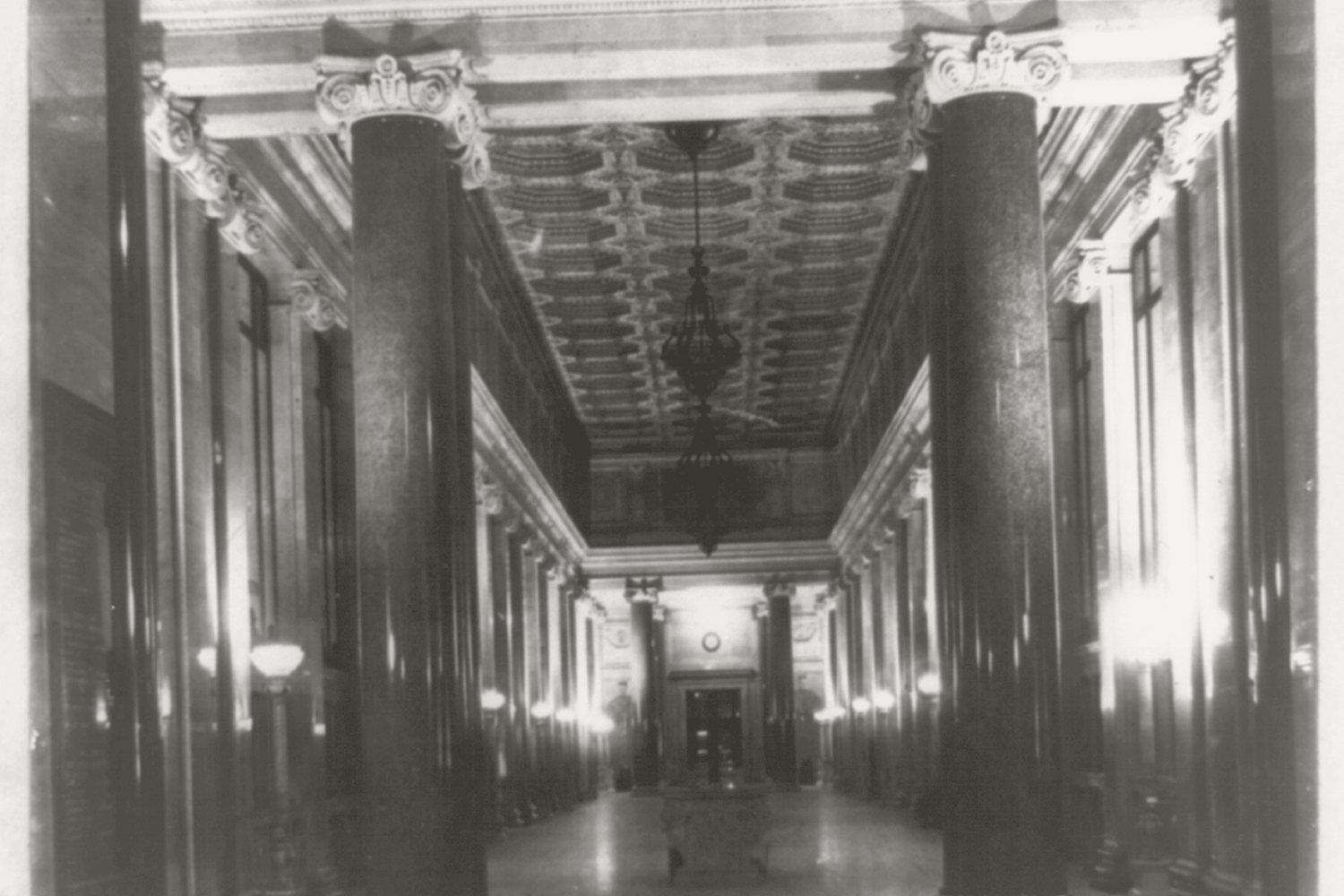
A long marble hallway with tall columns inside a post office building
Inside a new post office building, 1919. In the 1920s, many Americans kept their savings at the post office instead of a bank. Library of Congress
Postal savings interest2% a year
Deposits in 1929$153 million

On January 1, 1911, the U.S. Post Office started taking deposits: the Postal Savings System. It was meant for small towns with no bank, people who had lost trust in banks, and working people who wanted a convenient place to save.

Immigrants especially used it, because back home in Europe they were used to saving at the post office. The government guaranteed it, so even if a bank failed, the money was safe.

A dollar made of dimes

Opening an account took a dollar. If you didn't have one, you could buy 10-cent postal savings stamps and stick them on a card. Ten stamps made a dollar you could deposit. The interest was 2 percent a year.

U.S. Postal Savings

  • Began: January 1, 1911
  • Interest: 2% a year
  • Opening deposit: $1 (could be built up with 10¢ savings stamps)
  • Deposits: $153 million by 1929
  • Peak: 1947, almost $3.4 billion and more than 4 million depositors
  • Ended: July 1, 1967

Deposits grew slowly at first, reaching $153 million by 1929. After the Depression shook people's faith in banks, they kept rising, peaking at almost $3.4 billion in 1947. The system closed in 1967.

The lesson, 100 years laterSaving begins with trust and nearness. Postal savings didn't succeed because of high interest, but because it was close by and safe. For a first-time saver, the best bank is the one with the lowest doorstep.

Sources

  1. USPS: Postal Savings System (began 1911, 2%, $1, 10¢ savings stamps, immigrants, $153 million in 1929, 1947 peak, ended 1967)
  2. Library of Congress: new post office building, interior (1919)

Dollar conversions use the U.S. Bureau of Labor Statistics CPI-U (1926 annual average 17.7; September 2026: 336.94), a factor of about 19.

More from this edition

The Day's Economy

The Customers Decided: How Kleenex Found Its Real Job

When Kleenex arrived in 1924, it was sold for wiping off cold cream. But customers were blowing their noses with it. The company listened, changed its ads, and tissue became one of the most ordinary things in every home.

Makeup remover → nose tissue
Oil & Industry

Goodbye, Iceman: The Year the Electric Refrigerator Came

In 1926 most American kitchens had an icebox, and the iceman came every few days. But that year the number of homes with an electric refrigerator reached 248,000. The kitchen was starting to change.

Homes with a fridge: 4,000 (1920) → 248,000 (1926)
Patents & Inventions

The Drink Left on the Porch: How the Popsicle Was Born

One cold night in 1905, an 11-year-old boy left his drink outside. In the morning it was frozen solid around the stirring stick. He licked it — and twenty years later he patented his mistake.

An 11-year-old's mistake → 2 billion a year
Main Street Wallet

The Catalog Store Comes to Town: Sears

For decades, rural Americans flipped through the thick Sears catalog and ordered by mail. Then in 1925, Sears opened its first real store — because the car was starting to bring customers to town.

Mail-order catalog → neighborhood store