Monday, November 23, 2026100 years ago today: Tuesday, November 23, 1926

The Good News of 100 Years Ago

Money · Gold · Oil · Patents
Gold, 1 oz (1926)$20.67Eggs, a dozen48.5¢Milk, a quart14¢Ford Model T Runabout$360Route 662,448 mi$1 in 1926 = today≈ $19Gold today, 1 oz$4,043
Front Page › The Day's Economy
The Day's Economy

The Store That Handed Shoppers the Basket: Piggly Wiggly

Until 1916, a clerk fetched everything you bought at the grocery. A Memphis store broke the rule: it handed customers a basket and let them choose. By 1926, Americans loved it.
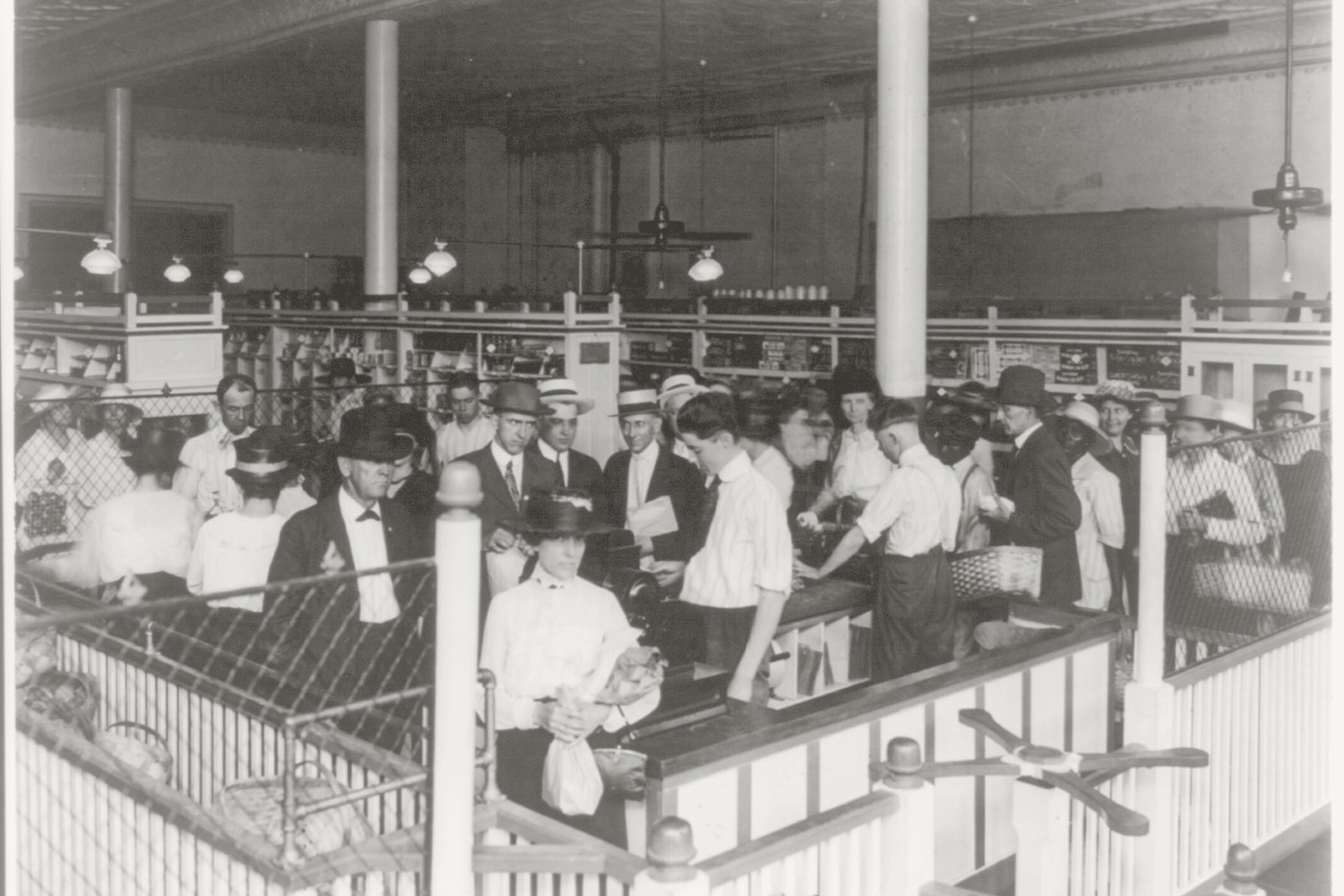
Shoppers carrying wooden baskets file along the aisles between shelves inside a store
Piggly Wiggly in Memphis, Tennessee, 1918 — the world’s first self-service grocery, where shoppers took a basket and chose for themselves. Clarence Saunders / Library of Congress
First Piggly Wiggly1916
Stores today530+

Picture a grocery before 1916. You stand at the counter and hand over your list. The clerk scoops flour and sugar from barrels and shelves behind him, weighs them, and wraps each item one by one. When it was busy you waited a long time, and the clerks' wages were added to your prices.

In 1916, Clarence Saunders of Memphis, Tennessee, opened a new kind of store called Piggly Wiggly. At the entrance you took a wooden basket and walked the aisles, choosing for yourself. Employees stocked the shelves but didn't pick items for you.

The secret of the funny name

Asked why it was called Piggly Wiggly, Saunders never gave a straight answer. One story says he saw little pigs squeezing under a fence from a train window. Once, he reportedly said: "So people will ask that very question."

The first self-service grocery

  • Opened: 1916, Memphis, Tennessee
  • Founder: Clarence Saunders
  • New idea: customers take a basket and choose for themselves
  • End of first year: 9 stores around Memphis
  • The next year: patents on the store design
  • Today: more than 530 stores in 17 states

By the end of the first year there were nine stores around Memphis, and the idea spread across the country. The small pleasure of pushing a cart down the aisles today began with a wooden basket in Memphis in 1916.

The lesson, 100 years laterTrust the customer, and the store gets lighter. Saunders gave shoppers back the fun of choosing and used the clerks' wages he saved to lower prices. Service is not only doing things for people; it is also letting them do it themselves.

Sources

  1. Smithsonian Magazine: The Bizarre Story of Piggly Wiggly (1916 Memphis, baskets, patents, 9 stores, the name, 530 stores)
  2. Library of Congress: Piggly Wiggly self-service grocery, Memphis (1918)

Dollar conversions use the U.S. Bureau of Labor Statistics CPI-U (1926 annual average 17.7; September 2026: 336.94), a factor of about 19.
More from this edition

Gold & Markets

The 1926 Dollar Bill That Didn't Fit Your Wallet

In 1926, the bills in American wallets were much bigger than today: 7.375 inches long. Three years later the country shrank its money, and that size has lasted ever since.

1926 bills were about 20% bigger
Oil & Industry

A Sign That Glowed in Daylight: Neon Comes to America

In 1923, a Los Angeles car dealer hung two strange signs from France. A red light burned inside glass tubes, and people stopped in the street to stare. By 1926, America’s nights were turning red.

One sign: $1,250 · "liquid fire"
Patents & Inventions

An Invention Learned From Ice Fishing: Frozen Food

In the bitter cold of Labrador, an American watched Inuit fishermen. Fish pulled into air at 40 below froze instantly — and tasted fresh months later. In 1926 he was working to recreate that secret in a factory.

Ice fishing at −40° → frozen food
Main Street Wallet

The Machine That Gave Women Back Their Mondays

For American women in 1926, Monday was wash day — all day. Haul and heat the water, scrub on the washboard, wring, hang. That year, the washing machines spreading into American homes began to return their greatest gift: time.

Women get their Mondays back