America's Industry at High Tide, and Belgium's Money Tied to Gold Again
On November 15, 1926, the paper carried a Federal Reserve Board report: American industry was "at a high tide of activity." Every month of 1926 had been busier than the same month of 1925 or 1924. The same report noted that Belgium had just put its currency back on gold.
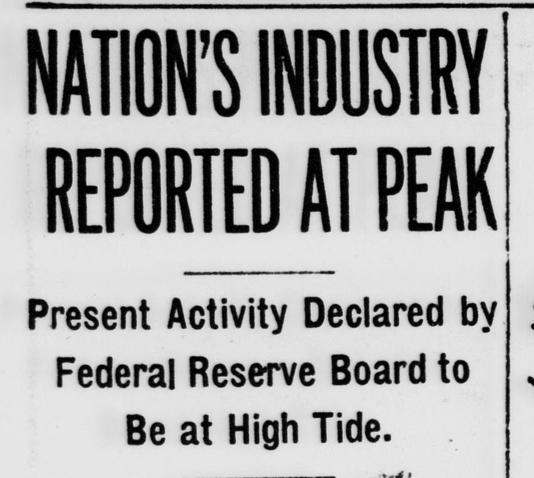
The headline on page 26 read "Nation's Industry Reported at Peak." The Federal Reserve Board said American industry was at "high tide." Every single month of 1926 had seen more activity than the same month in 1925 or 1924, and in September production reached a new high.
The board explained why. One reason was coal: with a long coal strike in England, American mines were working overtime to fill the gap. Another was cloth: a drop in cotton and wool prices had set the textile mills humming. Best of all, the prosperity reached the people who did the work. The purchasing power of factory workers and farmers had risen with it, and their buying kept demand strong at home. Goods moved smoothly through wholesale and retail stores, and stocks on hand at the end of September were generally below normal.
Belgium goes back to gold
The second half of the report was about gold. After the World War, the money of many European countries had swung wildly in value. Now the important trading nations were putting their currencies back on a stable footing, bringing the world's money markets closer together and evening out interest rates. Belgium had just returned to a gold basis for its currency.
America lent a hand. The board approved a plan for the Federal Reserve Bank of New York to buy, for a year, prime bankers' bills payable in gold from the National Bank of Belgium, up to $10,000,000, about $190 million today. It was a sturdy prop to keep Belgium's newly gold-backed money steady.
The page 26 story
- Source: the Federal Reserve Board
- 1926: every month busier than 1925 and 1924
- September: record production (coal, cotton and wool textiles)
- End of September: stocks below normal, because goods were selling
- Belgium: currency returned to a gold basis
- New York Fed: to buy Belgian gold bills up to $10,000,000
100 years later
No country ties its money to gold anymore. But central banks still lend each other a hand when one of them is under strain. And the board's 1926 point, that the economy keeps going when working people have money in their pockets, is just as true a century later.
Sources
Dollar conversions use the U.S. Bureau of Labor Statistics CPI-U (1926 annual average 17.7; September 2026: 336.94), a factor of about 19.