Grind the Coal to Powder, and 10 Tons Do the Work of 12
When the price of bituminous coal rose in the fall of 1926, American industry went looking for ways to burn less of it. The idea drawing the most attention: grind coal as fine as flour and blow it into the fire.
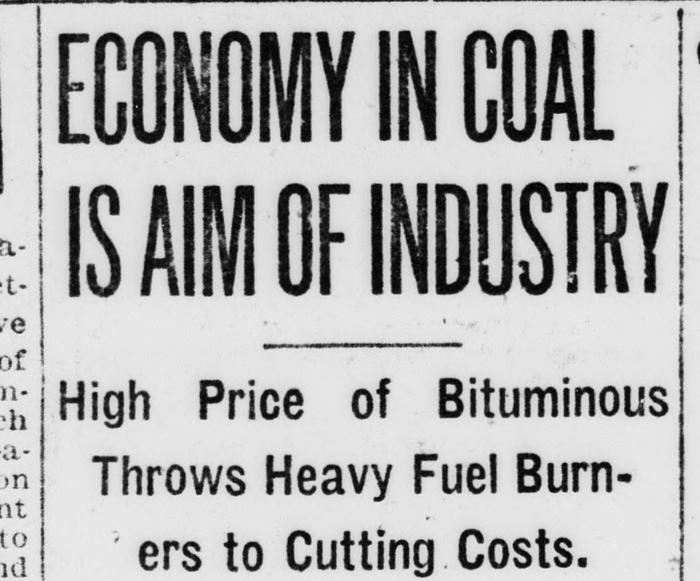
Page 13 of the Evening Star carried a special dispatch from New York that day. The rising price of bituminous coal had turned industry everywhere toward more economical use of fuel, and experiments were going forward "in scores of plants": pulverizing coal, distilling liquid fuels from it, turning it completely into gas, eliminating smoke.
Why powder?
Backers of pulverized coal said the method had stretched 10 tons of coal to do the work formerly done by 12, a saving that would come to 4,000,000 tons a year. Heating engineers credited smoke elimination, greater thermal efficiency and flexibility in handling.
It also made poor coal usable. The Central Railroad of Brazil ran on pulverized coal "of such poor quality that it will not burn well unless powdered." The Cahokia power plant at East St. Louis burned coal that was 12 percent ash and 10 percent moisture, costing just $3 a ton delivered.
It worked at the other extreme, too. The Portland cement industry, the largest user, needed temperatures near 3,000 degrees and burned some 8,000,000 tons of pulverized coal a year. The iron and steel industry used 2,500,000 tons. In 1918 only 200,000 tons of pulverized coal went to making power; by 1926 the boiler surface fired by it had grown tenfold.
On page 13
- Pulverized coal: 10 tons do the work of 12
- Possible saving: 4,000,000 tons a year
- Cement industry: 8,000,000 tons a year
- Iron and steel: 2,500,000 tons a year
- Cahokia plant's coal: $3 a ton, delivered
100 years later
Coal-fired power plants around the world still burn their coal as powder. And today's factories ask the same question about every fuel: how much less can we burn to do the same work?
Sources
Dollar conversions use the U.S. Bureau of Labor Statistics CPI-U (1926 annual average 17.7; September 2026: 336.94), a factor of about 19.