"No Winter Break This Year": 1926 Heads for a Building Record
On November 13, 1926, the paper predicted a "winter building boom." Building contracts had grown so much that 1926 was expected to beat the record set in 1925.
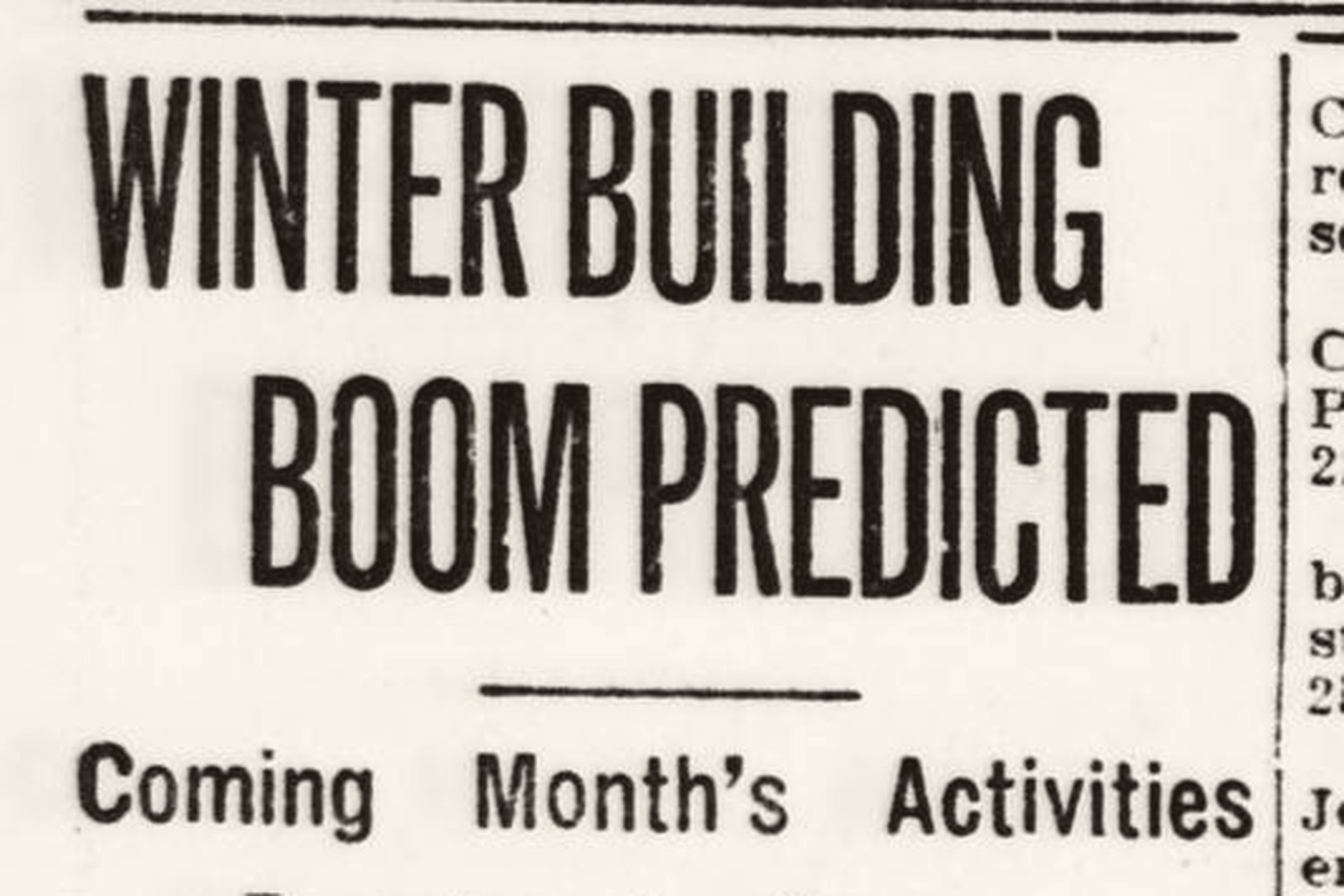
The real estate section on page 18 carried the headline "Winter Building Boom Predicted," based on figures from the Associated General Contractors of America. Building usually slows in winter. Not this year, the paper said.
The reason was in the numbers. Contracts awarded in September were 6 percent above the same month a year earlier, and 9 percent higher for the first nine months. But construction actually started was up only 2 percent. Many jobs had been signed but not yet begun. Once they broke ground over the winter, 1926 would set a new record.
A record in August
The contract index, with 1913 as 100, had hit an all-time high of 264 in August and stood at 214 in September. On page 17 the same day, a columnist argued that "it is actually cheaper to own a home than to rent," for any family that could save $1,000. Washington alone issued $725,000 in building permits that week.
In that day's paper
- Page 18: September contracts +6%, Jan.–Sept. +9%
- Contract index: 264 in August (a record), 214 in September
- Page 17: "Cheaper to Own Than Rent Home"
- Washington permits that week: $725,000 (about $13.8 million today)
100 years later
The building boom of the mid-1920s reshaped American cities. Many of the red-brick houses and apartment buildings you pass in Washington today went up in exactly these years. The hammers that kept going through that winter became homes people still live in.
Sources
- Evening Star, Nov. 13, 1926, page 18: "Winter Building Boom Predicted"
- Evening Star, Nov. 13, 1926, page 17: "Cheaper to Own Than Rent Home"
Dollar conversions use the U.S. Bureau of Labor Statistics CPI-U (1926 annual average 17.7; September 2026: 336.94), a factor of about 19.