Two Months of News for the Arctic, Delivered by Radio
At 10 p.m. on November 13, 1926, a Chicago radio station broadcast a special program for the Arctic. No mail or news had reached those settlements since the spring thaw, so radio brought them two months of headlines at once.
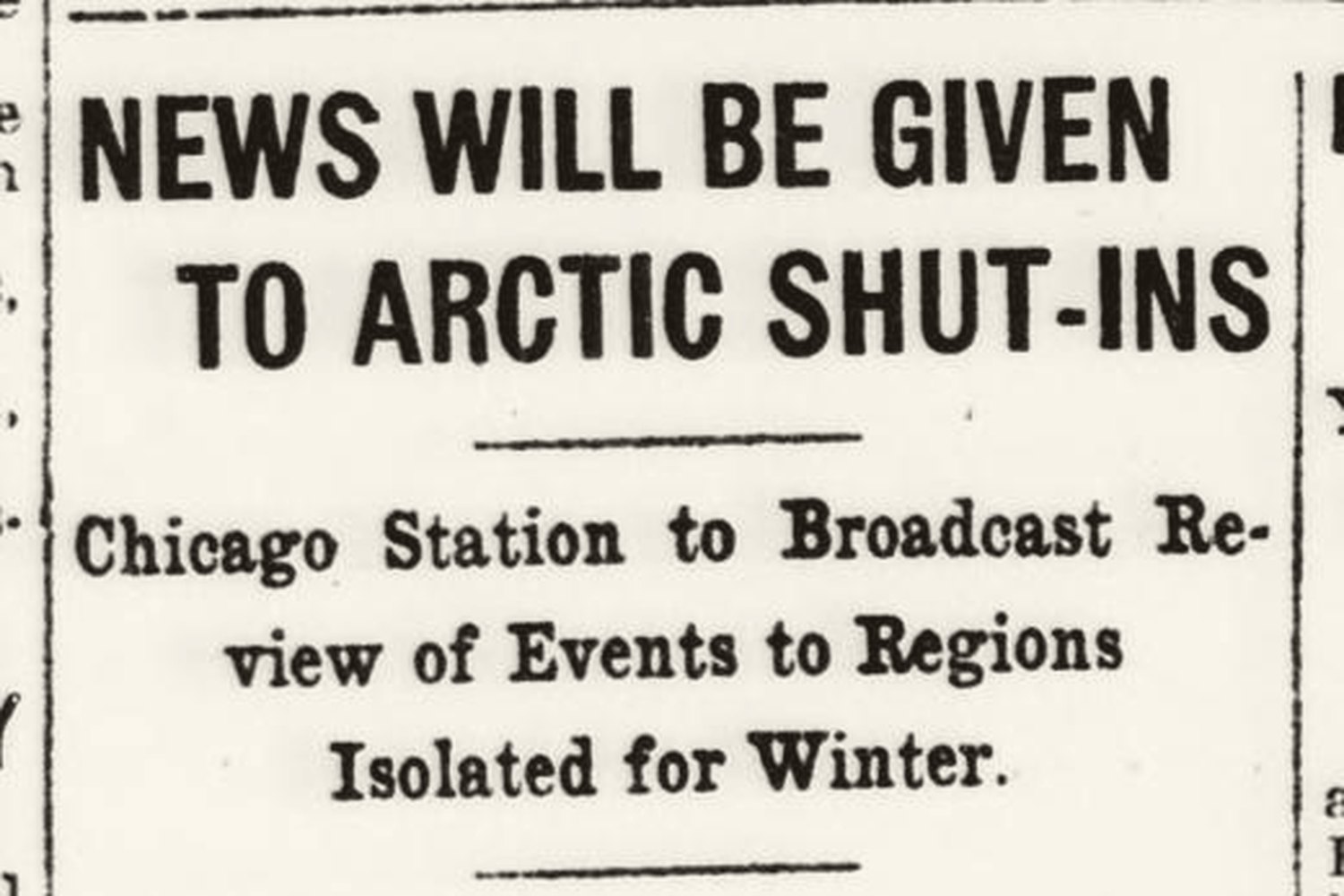
Page 10 carried an Associated Press story from Pittsburgh: "News Will Be Given to Arctic Shut-Ins." That night station KYW, Chicago, would broadcast a review of the past two months to Arctic settlements.
"No mail or news has entered the Arctic region since the first boats after the Spring thaw," the paper explained. So KYW would tell the trading posts and the Royal Canadian Mounted Police detachments that Gene Tunney was the new heavyweight champion of the world, and that destructive hurricanes had struck Florida and the West Indies.
A schedule sent ahead
The listeners had already been sent the broadcast schedule. KYW went first, and the other Westinghouse stations followed later in the month: KFKX in Hastings, Nebraska; WBZ in Springfield, Massachusetts; and KDKA in Pittsburgh.
On page 10
- First broadcast: KYW, Chicago, 10 p.m. Eastern
- Listeners: Arctic trading posts and Mounted Police posts
- Content: the big news of the last two months
- Next: KFKX, WBZ and KDKA
100 years later
Arctic research stations now read the news live over satellite internet. But picture that winter night in 1926: people in an icebound settlement gathered at the radio, hearing two months of the world all at once. News was a gift.
Sources
Dollar conversions use the U.S. Bureau of Labor Statistics CPI-U (1926 annual average 17.7; September 2026: 336.94), a factor of about 19.