Gold Letters on a Carrying Chair Gave Back a Queen's Name
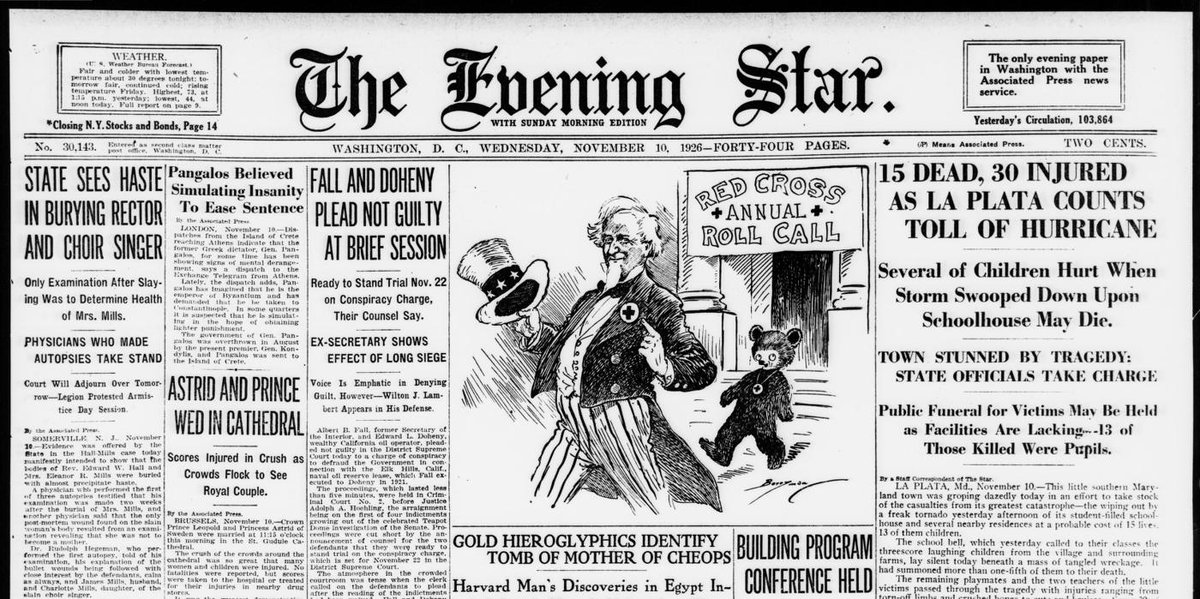
On November 10, 1926, the front page reported that Harvard's George Reisner had identified the tomb of Queen Hetepheres, mother of King Khufu (Cheops). The clue was two inscriptions in gold hieroglyphics on the back of a carrying chair.
The front page of the Evening Star that day carried an AP story from Cairo. Dr. George A. Reisner, Harvard's professor of Egyptology, had issued a report on his work at the tomb of Queen Hetepheres — wife of Sneferu, first king of the Fourth Dynasty, and mother of King Khufu, builder of the Great Pyramid.
What named the tomb's owner was the queen's carrying chair. Two inscriptions in gold hieroglyphics on its back bore her name. Reisner concluded that she died some time after her son took the throne and was first buried at Dahshur, to the south. When it was discovered that thieves had rifled that tomb, Khufu's officials moved her to a new tomb near the entrance of the Great Pyramid at Giza — a vertical shaft cut about 100 feet down through the limestone.
Joints sheathed in copper
The tomb also held what the paper called "lovely household articles." The framework of a bed canopy was "an astonishing piece of work": all its tenons and mortises were sheathed with copper, and it had copper attachments for curtains. Panels bearing the name of her husband Sneferu were found with it. The sarcophagus was expected to be opened in December.
The same paper carried an ancient love story, too. H. H. von der Osten of the University of Chicago had covered more than 3,000 miles of Hittite territory by automobile, accompanied only by his wife, and found 65 settlements where only three had been known. He described a letter in which King Tut's young widow asked a Hittite king whether he had a son eligible to marry her.
On pages 1 and 7
- Discoverer: George A. Reisner, Harvard
- Tomb of: Queen Hetepheres, mother of Khufu
- Clue: two gold hieroglyphic inscriptions on a carrying chair
- Tomb: a vertical shaft about 100 feet deep in limestone
- Finds: a canopy frame with copper-sheathed joints, household goods
- Same day: the von der Ostens find 65 Hittite settlements
100 years later
The sarcophagus was opened in March 1927 — and, to everyone's surprise, it was empty. But the queen's carrying chair, bed and canopy, painstakingly recorded and rebuilt from thousands of fragments by the expedition, can still be seen at the Egyptian Museum in Cairo. The patience of people who pieced together crumbling wood and gold leaf brought a mother's household back to life after 4,500 years.
Sources
- Evening Star, Nov. 10, 1926, pages 1 and 7: "Gold Hieroglyphics Identify Tomb of Mother of Cheops" (AP, Cairo)
- Evening Star, Nov. 10, 1926, page 7: "Tut's Widow Proposed" (AP, Chicago)
- Wikipedia: Hetepheres I (found 1925; sarcophagus opened 1927)
Dollar conversions use the U.S. Bureau of Labor Statistics CPI-U (1926 annual average 17.7; September 2026: 336.94), a factor of about 19.