Bond Prices as a Thermometer of Trust: New York, Nov. 10, 1926
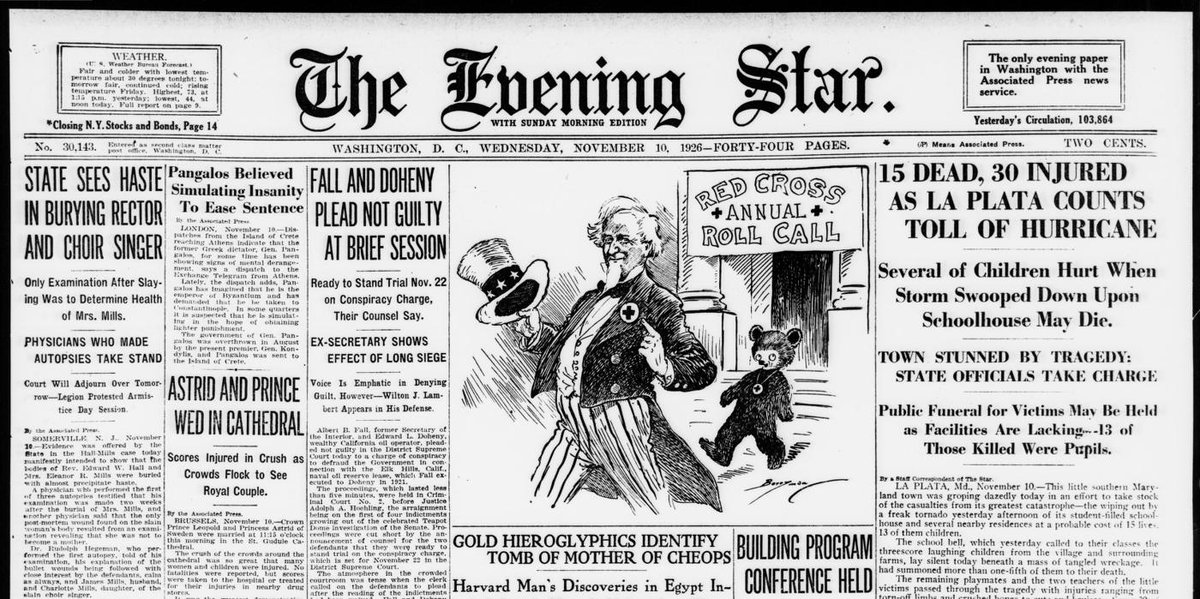
The day before, the paper said Americans would lend more than a billion dollars abroad that year. The next day in New York, French bonds hit their high for the year and Japanese bonds sold at the best price in their history.
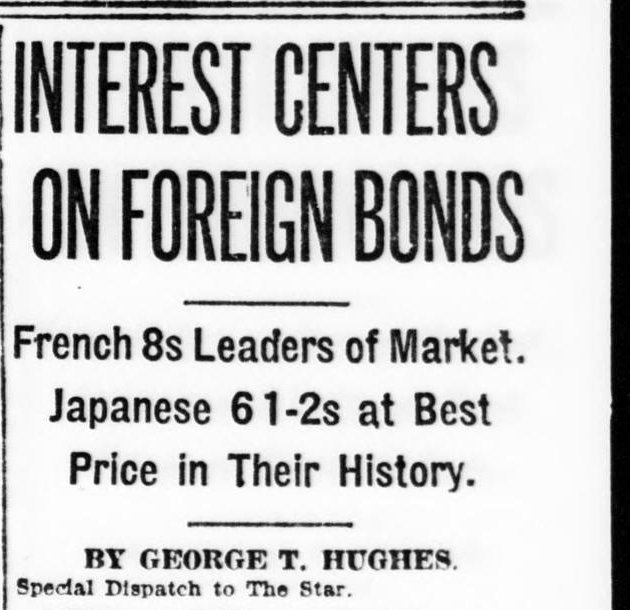
Page 14 of the Evening Star that day carried a bond market report from New York by financial writer George T. Hughes, headlined "Interest Centers on Foreign Bonds." The stars of the day were bonds that foreign governments and companies had issued to borrow money in America.
Bond prices are usually quoted against 100. A price above 100 means buyers trust more strongly that the debt will be repaid. As the day before, French government 8s led the way, rising to 107⅝ — a new high for 1926, approaching the all-time record of 109 set in 1924. Japanese government 6½s, approaching par, sold at the best price in their history, and the recently listed Ujigawa Electric Power 7s ran up sharply.
Not everything rose together
The gains, Hughes wrote, "were not uniform." City of Berlin bonds were higher, but one German company's bonds fell more than a point. Belgian bonds were steady, and Italian bonds a shade higher. Chinese government railway 5s, at 30, were off a point and a half. At home, railway and utility bonds sold steadily at around a 5 percent yield.
On page 14
- French 8s: 107⅝, high for 1926 (record: 109 in 1924)
- Japanese 6½s: best price in their history, near par
- Ujigawa Electric Power 7s: sharp run-up
- Chinese government railway 5s: 30, off 1½ points
- U.S. railway and utility bonds: around 5% yield
100 years later
A bond's price is a thermometer of how much people trust a country. The numbers from New York on November 10, 1926, show that trust ran at very different temperatures for nations rebuilding after the war. This is a history story, not investment advice.
Sources
Dollar conversions use the U.S. Bureau of Labor Statistics CPI-U (1926 annual average 17.7; September 2026: 336.94), a factor of about 19.