Two Comets Found on the Same Night
On November 9, 1926, the paper reported two new comets, invisible to the naked eye. Astronomers in Barcelona and in Crimea had spotted them on the same date.
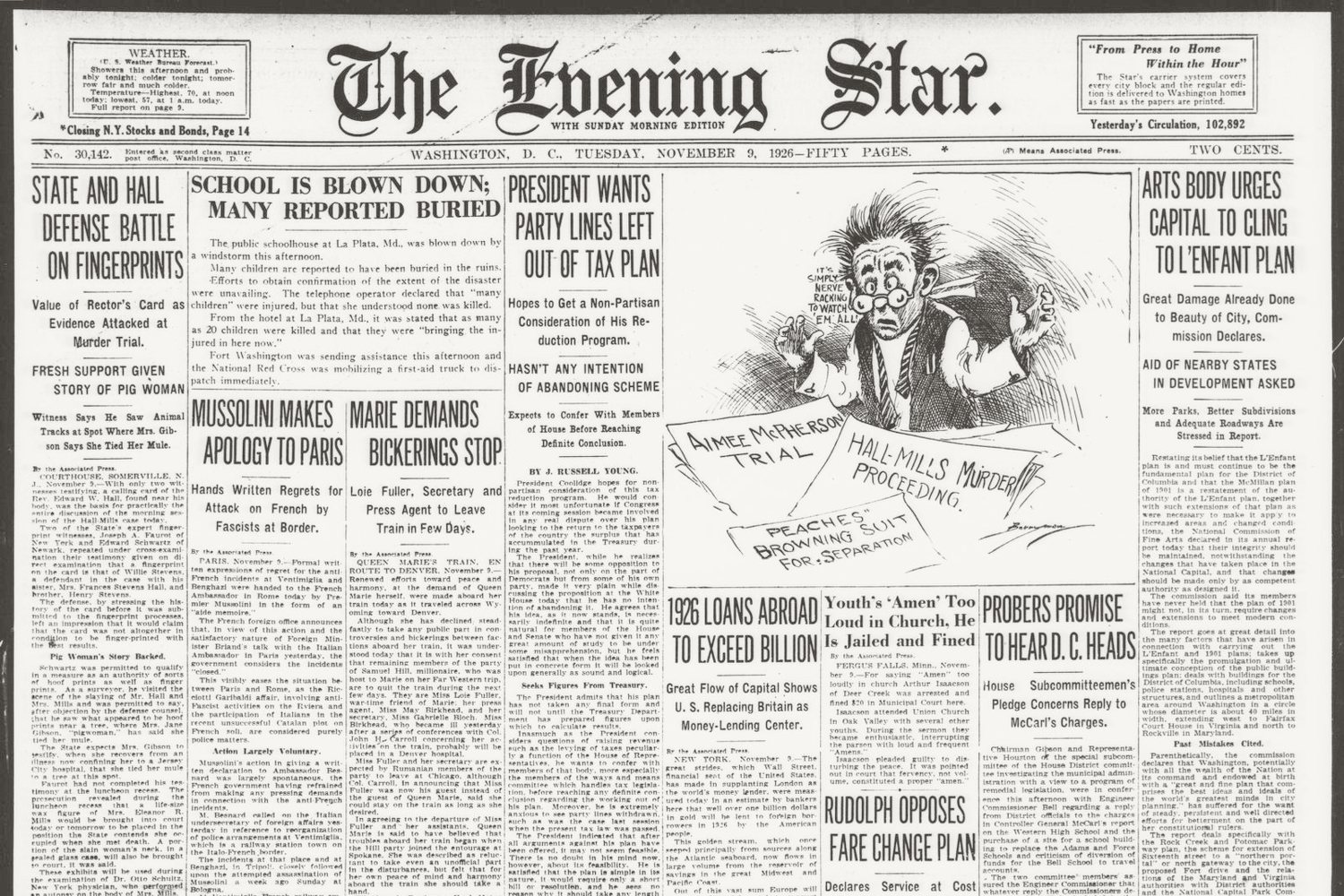
Page 6 of that day's paper carried a short item from Cambridge, Massachusetts. The Central Bureau for Astronomical Telegrams in Copenhagen had cabled Harvard University: two new comets had been discovered. Neither could be seen without a telescope.
One was found on November 5 by Prof. J. Comas Solà of Barcelona, Spain, in the constellation Cetus, the Whale. The other was found the same day by Prof. G. Neujmin at Simeis in Crimea, in Leo — the return of a comet he had first discovered some years before.
A sky linked by telegraph
In 1926, astronomers who found something new cabled Copenhagen, which shared the news with observatories around the world. That agreed-upon network is how discoveries in Spain and Russia reached an American newspaper four days later. People in different countries were watching the same sky together.
On page 6
- Discovered: Nov. 5, 1926
- Comas Solà (Barcelona): in Cetus, 12th magnitude
- Neujmin (Simeis, Crimea): in Leo, 14th magnitude, a returning comet
- News route: Copenhagen → Harvard, by cable
- Naked eye: not visible
100 years later
The comet Comas Solà found that night still carries his name and comes back near the sun about every nine years. One man's faithful watch of the night sky is still being followed a century later.
Sources
- Evening Star, Nov. 9, 1926, page 6: "Find Two New Comets Invisible to Naked Eye" (AP, Cambridge)
- 32P/Comas Solà (Wikipedia: discovered Nov. 5, 1926; period about 9 years)
Dollar conversions use the U.S. Bureau of Labor Statistics CPI-U (1926 annual average 17.7; September 2026: 336.94), a factor of about 19.