Ford: "The Five-Day Week Is Business, Not Charity"
On November 9, 1926, the front page carried an interview with Henry Ford. Giving workers their Saturdays back, he said, was not a good deed but a calculated business decision.
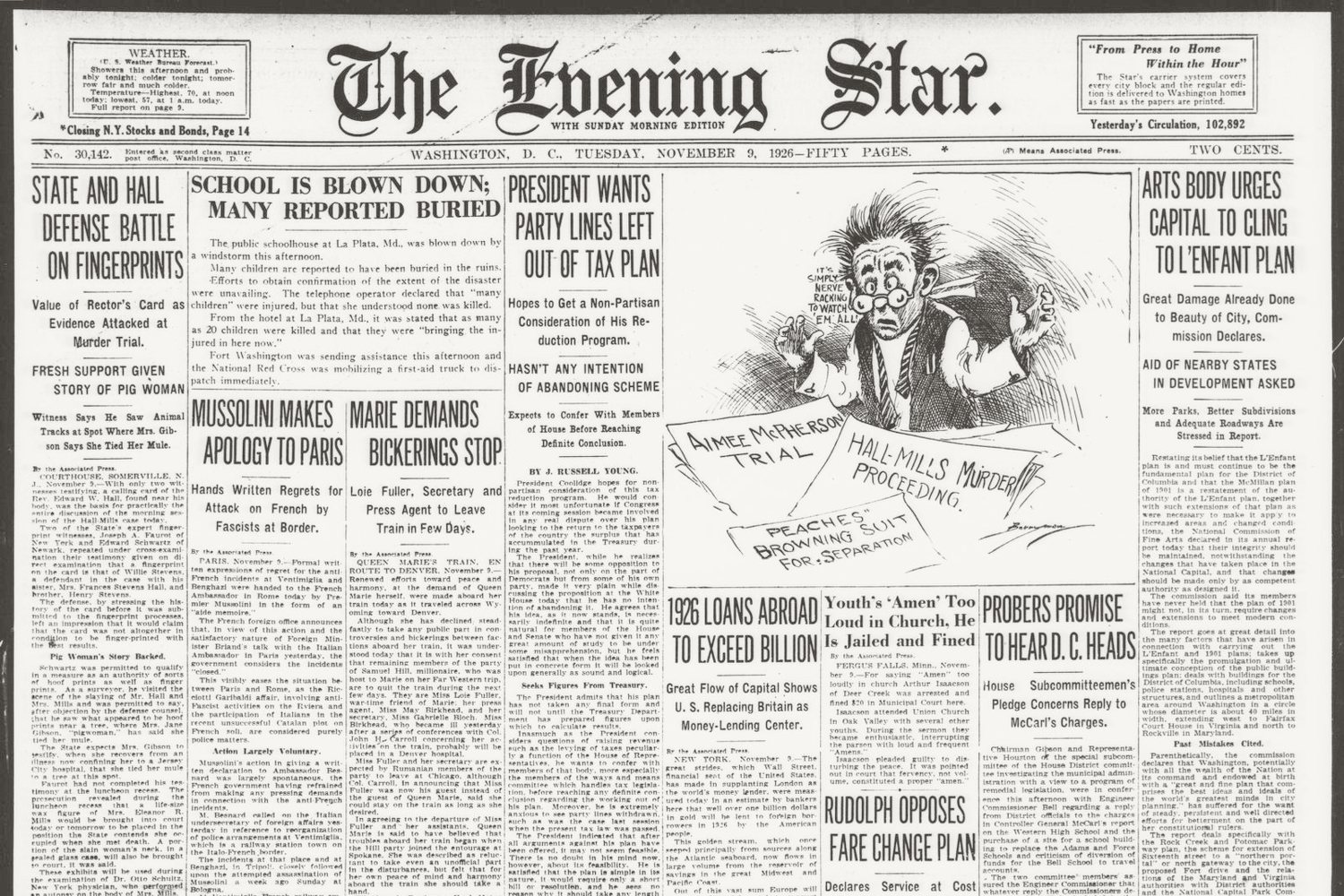
When Ford moved its plants to a five-day, eight-hour week that fall, the world took notice. On November 9 the Evening Star ran, on its front page, reporter Carroll Binder's account of a two-hour interview with Henry Ford in Dearborn, Michigan — the first of three articles.
Ford's words surprised readers. According to the paper, he called the five-day week "a cold business proposition with not the slightest pretense of philanthropy." It came, he said, from sound business experience and years of deliberation, and it had already proved its wisdom.
"No matter how many months ahead"
Some people whispered that Ford had cut the workweek because his cars weren't selling. Ford was annoyed by that. "This is a permanent policy which we shall adhere to," he said, no matter how many months ahead the orders ran. Rested people work better — and have time to take a car out for a drive.
On the front page
- Paper: Evening Star, Nov. 9, 1926, page 1
- Headline: "Five-Day Week Cold Business, Not Philanthropy, Says Ford"
- Reporter: Carroll Binder, two-hour interview in Dearborn
- Point: a permanent policy, kept however large the orders
- Price of the paper: 2 cents
100 years later
Today the five-day week is taken for granted. It began not only with good intentions but with the math that rested people work better. When doing good and doing good business point the same way, change lasts.
Sources
Dollar conversions use the U.S. Bureau of Labor Statistics CPI-U (1926 annual average 17.7; September 2026: 336.94), a factor of about 19.